
Last updated November 2, 2026
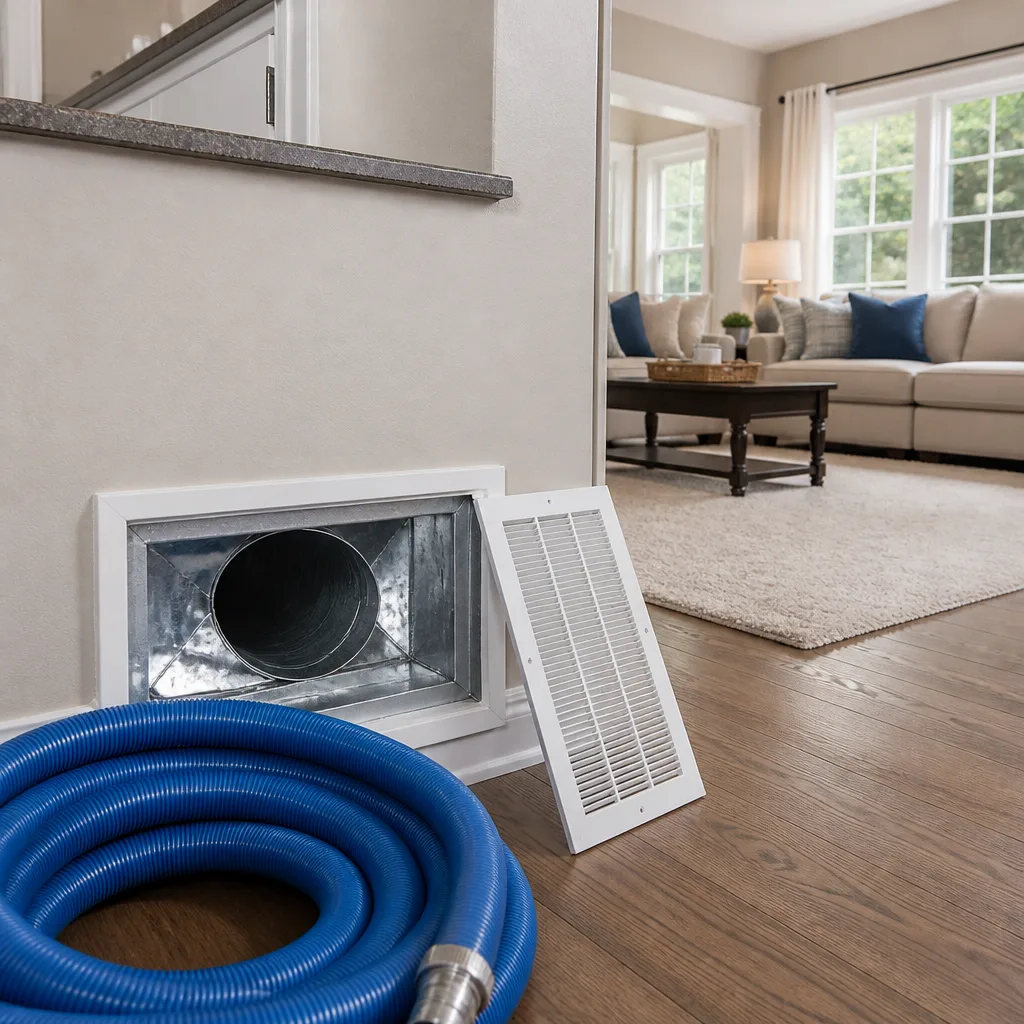 Whole-home duct cleaning
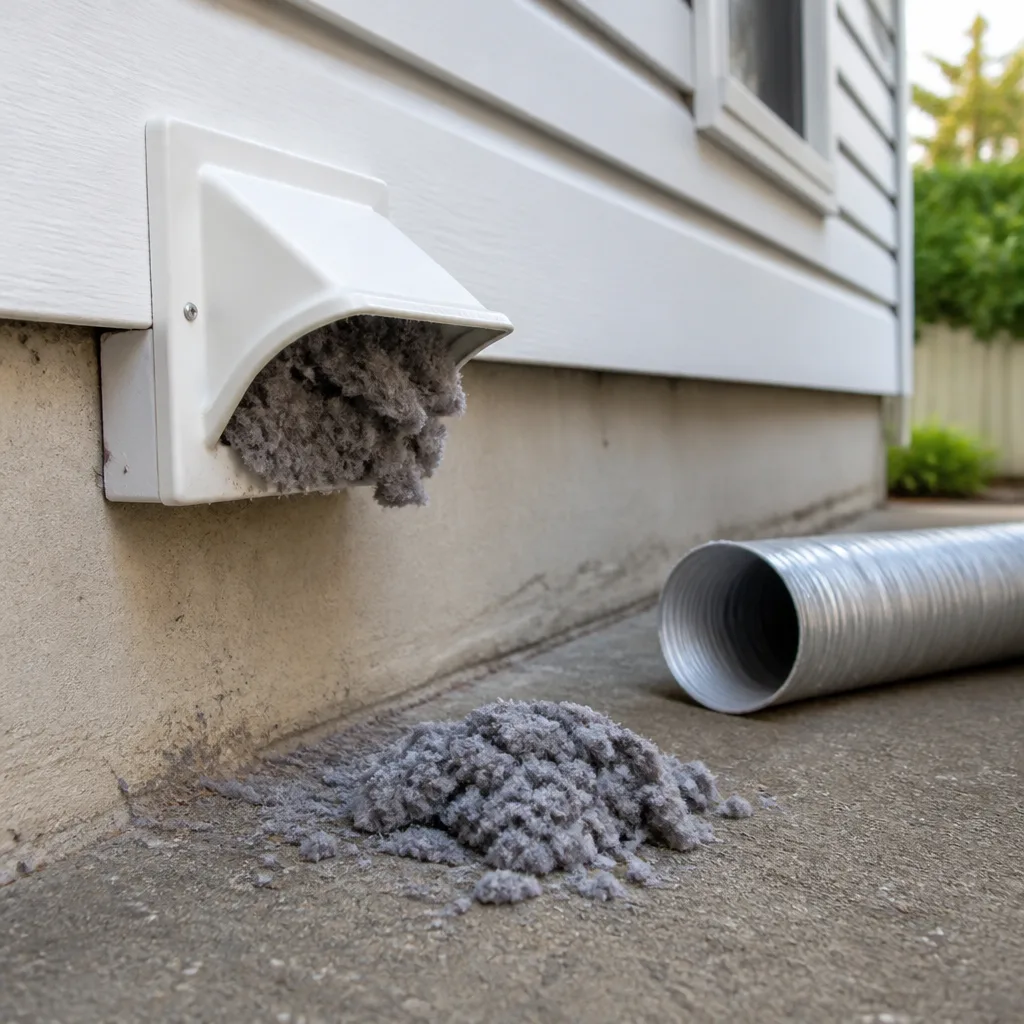 Dryer vent cleaning
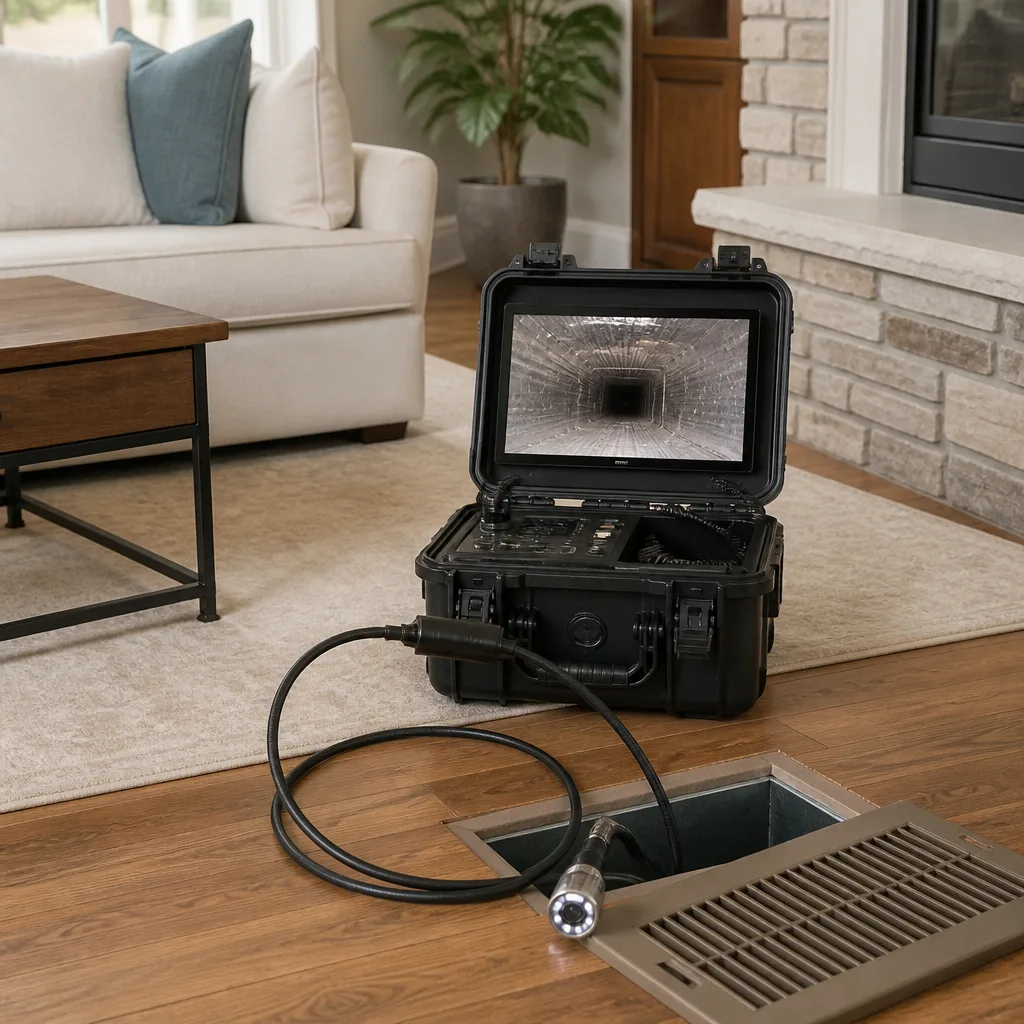 Camera inspection
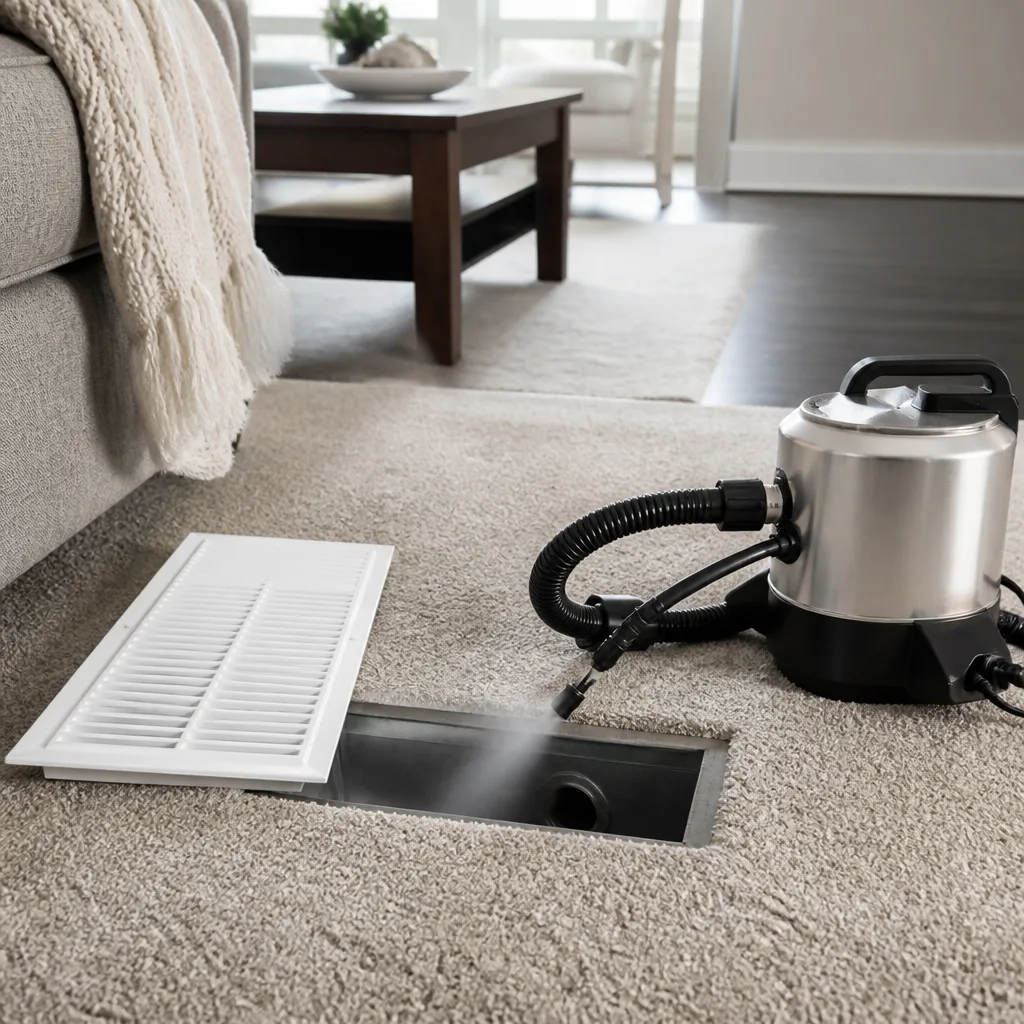 Sanitizing & deodorizing
Whole-system duct and dryer vent check with before-and-after photos - you see exactly what came out of your vents
That "$99 whole-house special" is a bait ad - the real number appears once they are in your hallway, or the "clean" is a shop-vac at the register. We photograph the inside of your ducts before and after instead.
Air Duct Cleaning Maintenance Checklist for Alameda Homeowners
Changing your filter every 90 days is the bare minimum, not a maintenance plan. If that’s all you’re doing, you have no real visibility into what’s happening inside your ducts. Alameda’s marine layer, hundred-year-old Victorians, and crawlspace foundations create a specific set of ductwork problems that a generic checklist never addresses. What follows is a maintenance routine built around observable, verifiable checkpoints you can actually use between professional visits. You’ll learn what to look for at each register, how to spot duct leakage without expensive testing equipment, and which seasonal triggers matter most in Alameda’s climate.
Quick Answer
Air duct maintenance in Alameda means checking every register monthly for dust patterns and airflow changes, inspecting accessible duct runs at the start and end of the rainy season (November through March), documenting what you find with dated photos, and scheduling a professional cleaning every 3 to 5 years. The checklist below breaks each of these into specific, observable steps that take about 15 minutes per month. If any checkpoint reveals dust accumulation at the register face, musty air during the rainy season, or airflow that’s noticeably weaker in one room, that’s your cue to call a professional.
Styles & brands we work with
- Whole-home duct cleaning
- Dryer vent cleaning
- Camera inspection
- Sanitizing & deodorizing
Table of Contents
- The Monthly Register Inspection Routine
- The Alameda Rainy Season Checklist (November – March)
- Airflow Checks and the Smartphone Static Pressure Test
- Documenting Duct Condition Over Time
- Filter Maintenance That Actually Protects Your Ducts
- Checking Crawlspace and Attic Duct Runs
- Dryer Vent Safety as Part of the Checklist
- When a Checklist Item Should Escalate to a Professional
The Monthly Register Inspection Routine
Most Alameda homeowners never look at their registers unless a room feels stuffy. That’s a missed opportunity, because the register is the one place where your duct system tells you what’s happening upstream. A monthly walk-through takes ten minutes and gives you early warning on problems that get expensive if ignored.
Here’s the routine we recommend, room by room.
- Remove the register cover. Most Alameda homes have either stamped steel floor registers (common in older Victorians and Craftsman bungalows) or stamped aluminum ceiling registers (typical in post-1960 construction). Either way, they lift off or unscrew with basic tools. Set the cover aside and look at the inside face. If you see a gray film that wipes off with a finger, that’s fine. If you see a dark, brownish, or black residue that’s sticky or clumped, that’s contamination from inside the duct, not household dust.
- Look down the register boot. Shine a flashlight into the opening. You should see the interior of the boot, which is the metal transition piece connecting the duct run to the register. A healthy boot is clean metal. A boot showing dust stalactites, pet hair clumps, or what looks like sand is telling you the duct run upstream is shedding debris.
- Check the register face for “dust shadowing.” This is one of the most reliable indicators of duct leakage. If you see a visible dust pattern on the wall or floor around the register, radiating outward in streaks or a fan shape, that means conditioned air is escaping at the boot-to-duct connection and pulling attic or crawlspace air with it. In Alameda homes with perimeter foundation vents, that escaping air often contains fine soil particles from the crawlspace.
- Feel the airflow with the system running. Place your hand flat over the open register. Note whether the airflow feels consistent and centered. If it feels weak, fluttering, or noticeably cooler than other rooms, there’s a restriction or a leak somewhere in that run.
- Listen for whistling or rattling. A whistling register usually means the duct run is undersized, crushed, or disconnected. A rattling register means loose mechanical connections. Both are fixable before they become failures.
In our experience working with Alameda systems, homes east of Park Street with older pier-and-beam foundations tend to show more crawlspace-related debris at registers than the slab-on-grade construction in Bay Farm Island and Harbor Bay Isle. Neither is immune, but the failure modes differ.
If your monthly inspection turns up dark residue, dust shadowing, or consistent weakness in one register, don’t ignore it and assume a filter change will fix it. Those symptoms indicate a problem inside the duct run itself. Air duct cleaning in Alameda addresses the contamination, but persistent airflow issues may also signal leakage that needs repair.
The Alameda Rainy Season Checklist (November – March)
Alameda’s rainy season runs roughly November through March, and it creates the highest condensation risk of the year for ductwork. The island’s marine layer keeps humidity levels elevated even between storms, and when warm furnace air moves through cold crawlspace duct runs, condensation forms on the inside of the duct walls. Wet dust becomes mud. Mud becomes a medium for biological growth.
You should run this checklist in early November, once in January, and again in late March as the weather transitions.
- Smell each register after the heat kicks on. Run your furnace for five minutes, then walk the house and put your nose near each register. A musty, damp-earth, or locker-room smell that appears only when the heat runs is a strong indicator of condensation inside the duct run. This is the single most telling check in the Alameda climate.
- Check for rust at the register boots. Pull a few floor registers in rooms above the crawlspace. Look for rust streaks, water stains, or pitting on the metal boot. Any of these means condensation has been forming and dripping. Surface rust is a warning sign. Pinholes mean the boot is on its way to failure.
- Inspect the crawlspace access after heavy rain. If your home has a crawlspace (most pre-1980 Alameda homes do), open the access door or hatch after a significant storm and check for standing water. The water table in Alameda is high, and parts of the island sit barely above sea level. A damp crawlspace means damp crawlspace air, which gets pulled into leaky duct runs and distributed through the house.
- Look for water staining on attic duct insulation. For homes with attic ductwork, go up with a flashlight and run your hand along the duct insulation in a few spots. Wet or crusty insulation, water stains on the vapor barrier, or damp sheathing near ducts means warm air is leaking out and condensing in the cold attic space.
- Check floor registers for swelling or warping. In Alameda’s older homes, wood floors around floor registers can absorb condensation moisture and swell. If a register cover suddenly fits tight or the wood around it looks darker than the surrounding floor, moisture has been present.
The rainy season is also when we see the most calls for air duct repair in Alameda homes, because condensation plus existing leakage creates a compounding problem. Water enters the duct run, saturates dust and debris, and the resulting weight can tear aging duct tape and flex connections.
Airflow Checks and the Smartphone Static Pressure Test
You don’t need a manometer to get useful static pressure data. A smartphone with a barometric pressure sensor (found on most phones made since 2015) and a free manometer app can give you a rough differential reading that flags duct leakage before it becomes a system efficiency problem.
Static pressure is the resistance your ducts create against the blower pushing air through them. If the pressure is too high, the system is working too hard. If it’s too low relative to design, you may have leakage. A leaky duct run bleeds conditioned air into the attic or crawlspace, which means your furnace runs longer to hit the thermostat setpoint and your utility bill rises.
Here’s the step-by-step process we recommend for a basic homeowner check.
- Download a manometer app that uses your phone’s built-in barometer. The absolute accuracy won’t match a professional differential manometer, but the relative readings between two test points are useful.
- Measure pressure at the return grille. Stand with your phone held steady at face height in front of the main return while the system runs. Record the reading. This is your baseline for the return side.
- Measure pressure at the supply register in the furthest room. Go to the room farthest from the furnace and take a reading at that register. Compare to the return reading.
- Repeat monthly and track changes. The key is not a single number. It’s the trend. If the differential between the return and the farthest supply register drifts significantly over a few months, something in the duct system has changed, usually leakage or partial disconnection.
- Check the pressure with the system off. Take a reading with everything off as a control. This establishes your phone’s baseline variance on a given day, since barometric pressure shifts with weather.
This is a rough tool, not a professional measurement. But a documented trend is worth far more than a one-time reading. If you’re seeing consistent drift, that’s a signal to have a professional inspect the duct runs for leaks, crushed sections, or disconnected joints. Full-system care means finding the source of the problem, not just treating the symptom.
Documenting Duct Condition Over Time
When you sell an Alameda home, the buyer will ask for a disclosures package. That package rarely includes any documentation of duct condition. It should. A dated photo record of your duct system’s condition is one of the most useful maintenance artifacts a homeowner can create, and almost nobody does it.
Here’s the documentation routine we recommend.
- Locate every access point. Most Alameda homes have at least one access panel in a hallway, closet, or garage ceiling. Some have two, one on the supply side and one on the return side. Identify these and keep a list.
- Photograph through the access panel twice a year. Use your phone’s flash. Aim down the duct run in both directions. Capture the interior walls of the duct. Do this in April and October, bracketing the rainy season.
- Photograph every register boot when you do the monthly inspection. You don’t need all of them every month. Rotate: do the downstairs registers one month, upstairs the next. The point is a cumulative record.
- Store photos in a dedicated folder with date and location. Name the files consistently. “2026-04-register-hallway-floor.jpg” takes three seconds and saves future you from guessing.
- Note any changes in a simple log. A notes app entry that says “April 2026, faint musty smell at living room register, photos attached” is gold when a professional comes out or when you’re preparing a home sale disclosure.
A documented history also protects you. If a buyer’s inspector flags duct contamination two years after you had a professional air duct cleaning in Alameda, your photo record shows the condition at the time of service and the timeline of whatever changed after. That’s the kind of verifiable history that keeps a transaction clean.
Filter Maintenance That Actually Protects Your Ducts
The air filter in your HVAC system has one job: protecting the furnace and the ducts from incoming debris. It’s not there to clean your indoor air, despite what filter marketing says. A filter’s efficiency at protecting the system is what matters for duct longevity.
The standard advice is to change your filter every 90 days. In Alameda, we’d adjust that based on what’s actually in your air. Homes with pets, especially multiple pets, should change filters every 30 to 45 days. Homes along Shore Line Drive and the windward side of the island get more airborne sand and sea salt, which loads filters faster. Homes with crawlspaces that draw in soil particles through leaky return ducts will also load filters sooner.
Here’s what to check at the filter slot.
- Check filter fit. A filter that’s loose in the slot lets air bypass it entirely. The filter should fit snugly with no visible gaps around the frame. If you can see daylight around the edges, you’re filtering only a percentage of the air moving through the system.
- Inspect the filter orientation on every change. The arrow on the filter frame points in the direction of airflow, which is toward the furnace. A backwards filter reduces airflow and increases static pressure, forcing the blower to work harder. This is a common mistake we see in Bay Farm Island homes where homeowners only touch the filter twice a year.
- Check the filter slot for dust buildup. Pull the filter out and look at the slot itself. Dust caked on the slot edges means bypass. This is air that went around the filter and directly into the blower and ducts.
- Consider filter rating carefully. A higher MERV rating is not automatically better for your home. Filters rated MERV 13 and above create significant resistance, and in older Alameda systems with 1-inch filter slots, they can choke airflow enough to cause coil freezing in summer and heat exchanger stress in winter. A MERV 8 to MERV 11 pleated filter is the sensible range for most Alameda homes.
- If you want better filtration, don’t chase filter ratings. The right move is a media cabinet or an Aprilaire filtration system installed at the air handler, which gives you MERV 13 or higher filtration without the pressure drop of a 1-inch restrictive filter. That’s an upgrade path worth discussing with a professional.
Filter maintenance is the one checklist item every homeowner knows about, and the one most often done wrong. Do it right and your ducts stay cleaner longer between professional cleanings.
Checking Crawlspace and Attic Duct Runs
The ductwork you can see from your living space is a small fraction of what’s actually moving air through your home. Most of the system lives in unconditioned spaces, and that’s where Alameda’s climate does its worst work.
If you’re comfortable going into your crawlspace or attic, a visual inspection twice a year catches problems early. Here’s what to look for.
- Sagging flex duct. Flexible duct runs should be supported every 4 to 5 feet with straps no wider than 1.5 inches. Sagging between supports creates low spots where condensation pools. In Alameda’s damp crawlspaces, a sagging flex run becomes a water reservoir within a single rainy season.
- Crushed or kinked sections. Look for duct runs that have been squeezed by stored items, damaged by rodents, or kinked at sharp bends. Any of these increases static pressure and starves the rooms downstream. In older Alameda homes where crawlspaces double as storage, we regularly see duct runs crushed under boxes and holiday decorations.
- Separated or poorly sealed joints. Run your hand (gloved) along the joints where duct sections connect. Feel for air escaping. Look for duct tape that’s peeling, brittle, or falling away. Duct tape, despite the name, is not a permanent duct sealing material. It fails within a few years in Alameda’s temperature swings, and once it fails, the system leaks.
- Rodent or pest damage. Look for chew marks, nesting material near duct runs, or droppings on top of ducts. Alameda’s older homes with crawlspaces are vulnerable to rats, and rats chew through duct insulation and flexible duct walls to get into the conditioned air path. This is a contamination issue and a repair issue.
- Missing or damaged insulation. Metal duct runs in unconditioned spaces should be fully insulated. Bare metal means condensation risk and energy loss. Look for insulation that’s torn, wet, or falling away from the duct wall.
If you’re not comfortable in a crawlspace or attic, don’t force it. This is one of the checklist items where professional eyes are worth the cost. A trained technician with professional equipment sees things a homeowner misses, and in our experience, the crawlspace is where the most serious duct problems in Alameda homes are found.
Dryer Vent Safety as Part of the Checklist
Your dryer vent is technically a duct, and it’s the highest-risk duct in your home. Lint accumulates inside it with every load, and lint is exceptionally flammable. The U.S. Fire Administration reports that dryer fires account for thousands of residential fires each year, and the leading cause is accumulated lint in the vent line.
Alameda homes present a specific set of dryer vent risks. Many of the island’s older homes have long dryer vent runs that snake through crawlspaces or interior walls to reach an exterior termination point. Every bend in the run is a lint trap. Ground-floor laundry rooms in Victorian flats often vent through basement areas where the vent line is shared or poorly supported. The marine air keeps lint damp and sticky, causing it to adhere to vent walls instead of blowing through.
Add these checks to your maintenance routine.
- Check exterior vent termination monthly. Go outside to where the dryer vent exits the house. Confirm the flap opens when the dryer runs and closes when it stops. A flap stuck open admits pests and damp air. A flap that never opens means the vent is blocked.
- Feel the airflow at the exterior vent. Stand outside while the dryer runs. You should feel strong, warm, humid air exiting. Weak airflow with the dryer on means a partial blockage somewhere in the line.
- Check the lint trap after every load. This should be automatic. A clean lint trap captures the bulk of the lint. A torn or damaged lint trap lets lint into the vent line, where it accumulates.
- Note drying times. If clothes that used to dry in one cycle now take two, that’s a vent restriction. It’s also a warning sign, not a nuisance.
- Schedule a professional dryer vent cleaning in Alameda every year to 18 months. This is a safety service, not a convenience. A professional cleaning removes the lint that homeowner tools can’t reach, especially in long or multi-bend vent runs.
We treat dryer vent cleaning as a core part of whole-home duct health. The same team and the same professional-grade approach apply: see the problem, remove the problem, verify the removal.
When a Checklist Item Should Escalate to a Professional
Some checklist findings are informational. Some are warnings. Knowing which is which keeps you from panicking over routine dust and from ignoring genuine problems.
Escalate to a professional inspection when you see any of these specific conditions.
- Dark, clumped, or sticky accumulation at a register boot or inside the duct. This is not normal household dust. It indicates contamination inside the duct run and likely requires professional cleaning.
- A musty or damp-earth smell that appears only when the system runs. This points to condensation and possible biological growth inside the ducts. Don’t ignore it through the rainy season.
- Visible dust shadowing on walls or floors around registers. This is a leak signal. Leaky ducts pull in attic or crawlspace air every time the system runs.
- Any signs of moisture inside a duct run. Rust, water stains, wet insulation, or pooled water in the crawlspace near ducts. Moisture in ducts requires professional remediation and likely air duct repair in Alameda to address the source.
- Significant airflow loss in one room compared to others. If a room that used to be comfortable now lags, there’s a restriction or disconnection. This is a fixable problem that gets worse with time.
- Evidence of rodents in or around duct runs. Droppings, nesting material, chew marks. This is a health issue before it’s a comfort issue.
- A dryer vent with weak airflow or long dry times. This is a fire risk. Take it seriously.
Our approach at Everclear Air Duct Cleaning is built around verification. We use Nikro HEPA-rated vacuum equipment and Abatement Technologies containment systems so that what we remove from your ducts is captured and controlled, not redistributed through your living space. If you see something on your checklist that concerns you, you should be able to get answers and documentation, not just promises.
Common Mistakes to Avoid
- Assuming a filter change handles everything. Your filter only protects the furnace and ducts from incoming debris. It does nothing for contaminants already inside the duct system. Alameda homes with decades-old ductwork often have years of accumulated debris that no filter will address.
- Ignoring the crawlspace. Many Alameda homeowners never go under their homes, and the ductwork down there is doing the hardest work. What lives in the crawlspace gets pulled into the system through every leaky joint. Treat the crawlspace as part of the duct system.
- Trusting “we cleaned your ducts” without seeing proof. The duct cleaning industry has a transparency problem. A cut-rate company can wipe down a few registers, run a shop vac up the first few feet of duct, and leave the rest untouched. If you can’t see the before-and-after, you don’t know what was done.
- Delaying duct repair because the system still produces heat. A leaky duct run can lose 20 to 30 percent of conditioned air into the attic or crawlspace before it reaches a room. Your furnace still heats the house, but it runs longer and costs more. The leak also pulls contaminated air into the system every cycle.
- Using high-MERV filters in old systems without checking static pressure. A very restrictive filter in a system designed for low resistance can starve the blower and cause the exact problems you’re trying to prevent. Match the filter to the system, not to the marketing.
- Never documenting anything. A maintenance list without a record is just a memory. Write down what you find, photograph it, and date it. When you need professional help or when you sell the home, the record matters.
- Treating dryer vent lint as a minor annoyance. It’s a fire hazard. Lint is flammable, and a blocked vent line can ignite. This is a safety item, full stop.
See the difference
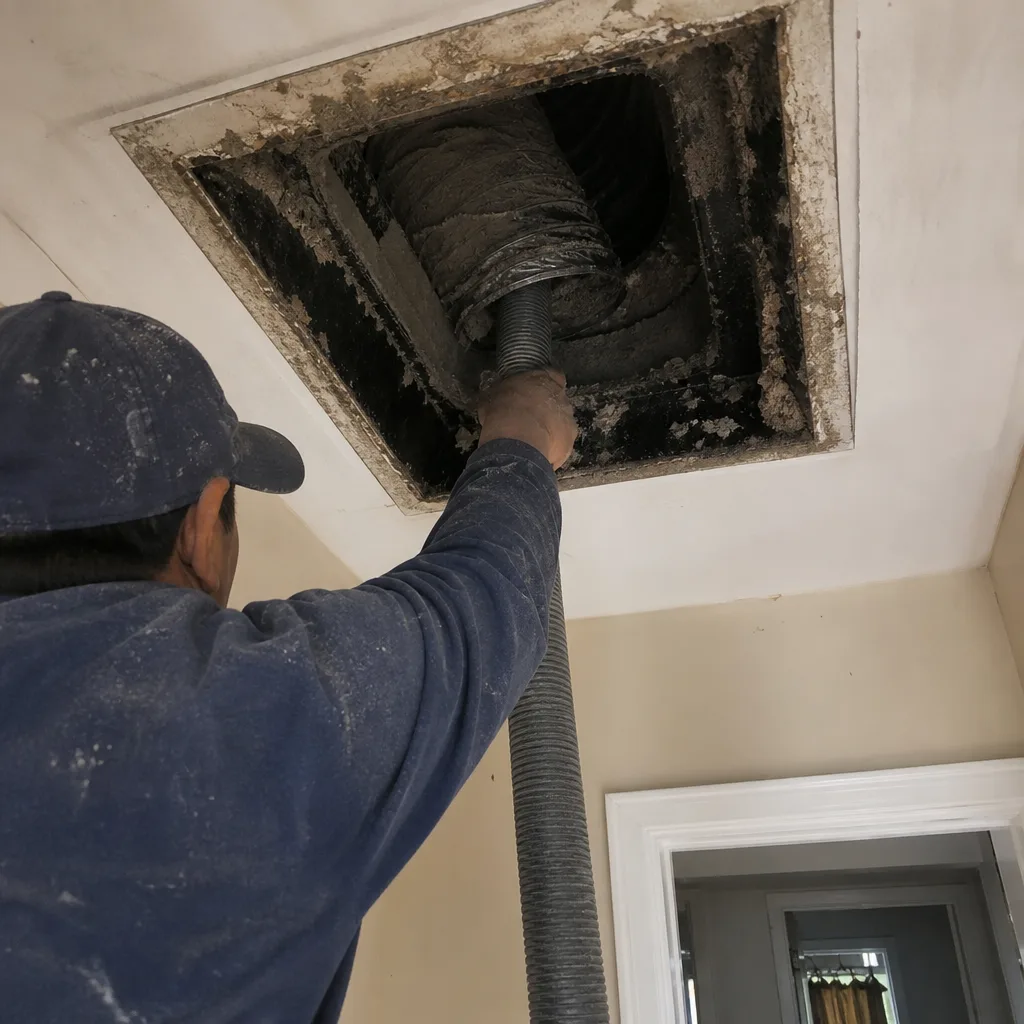 Before
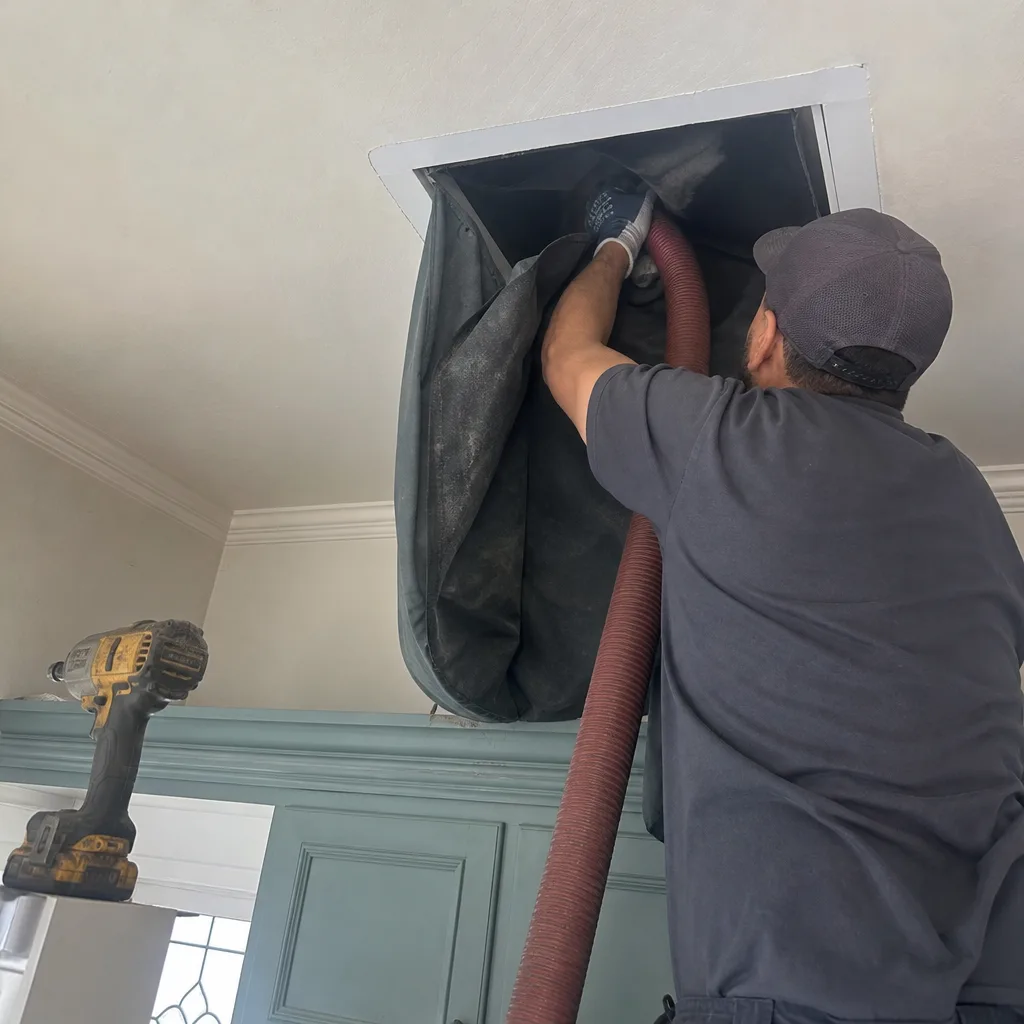 After
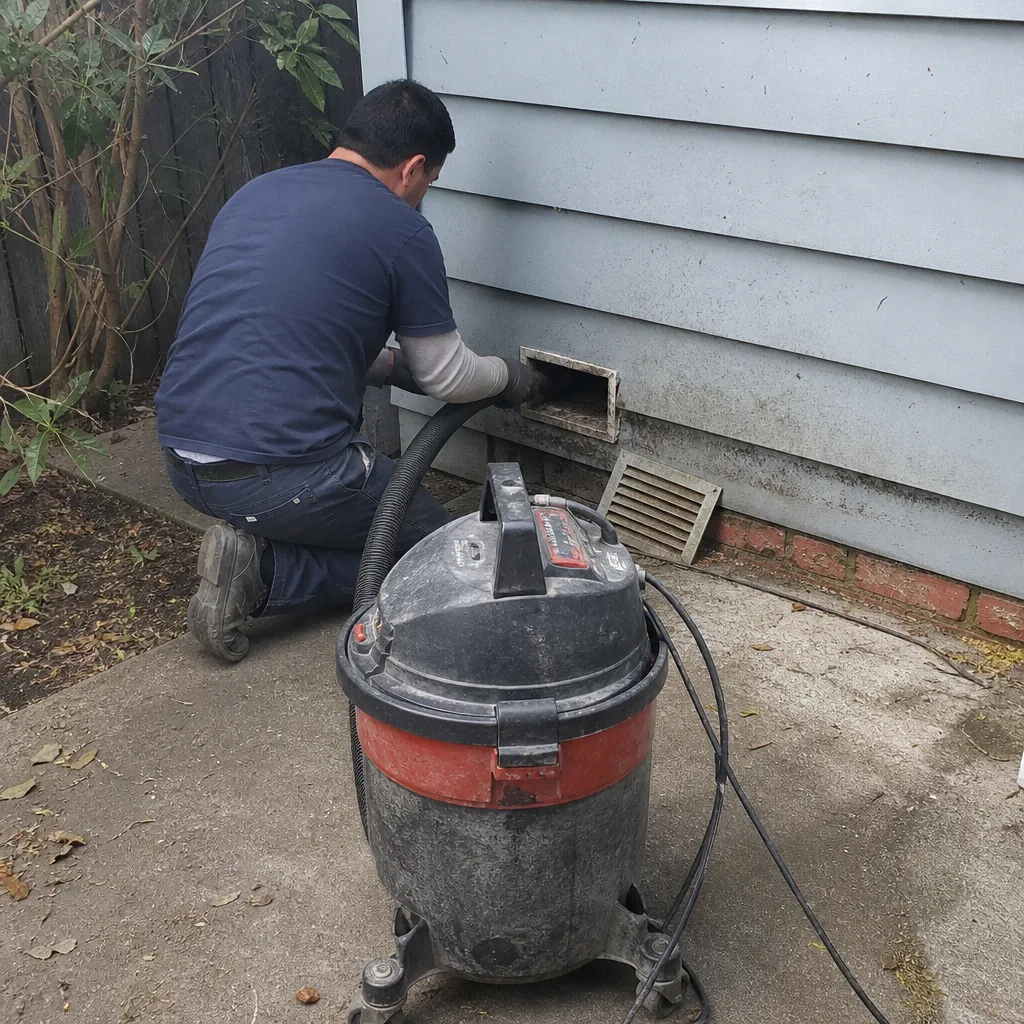 Before
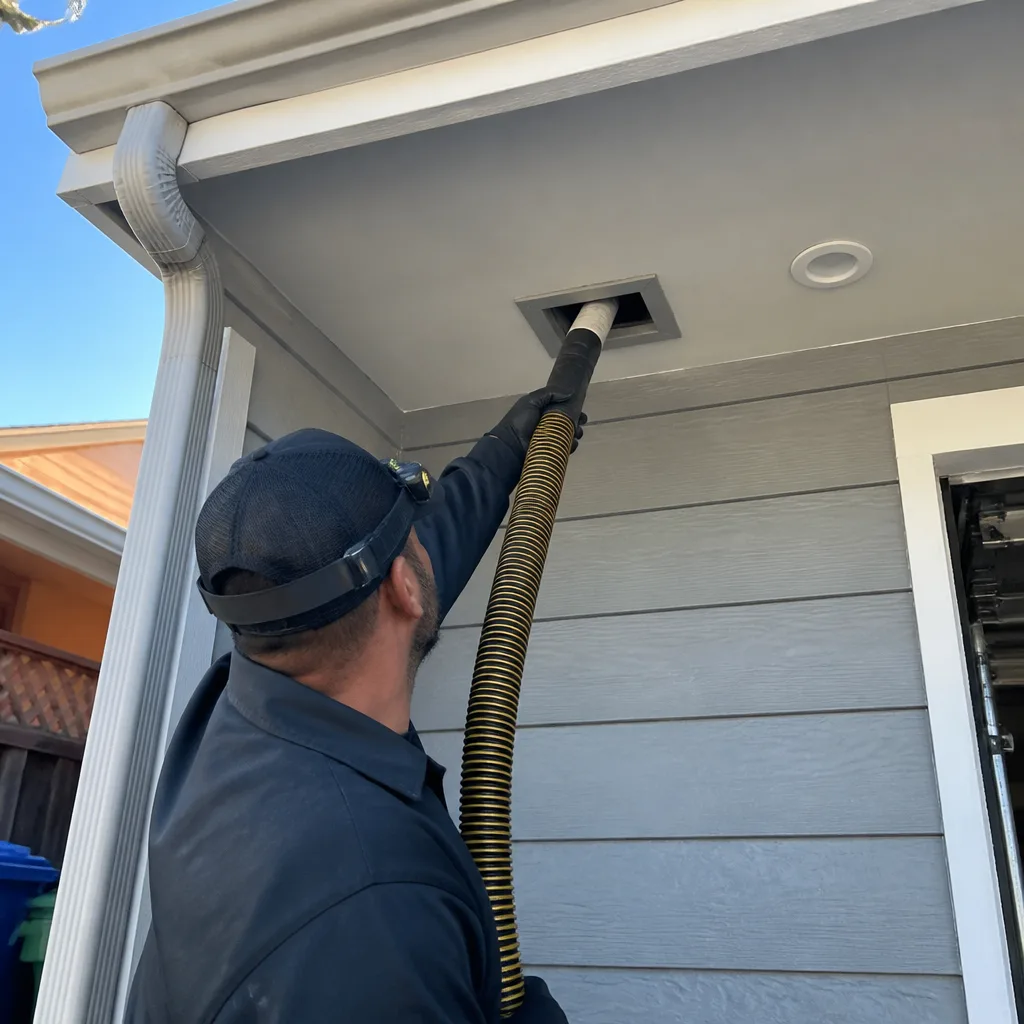 After
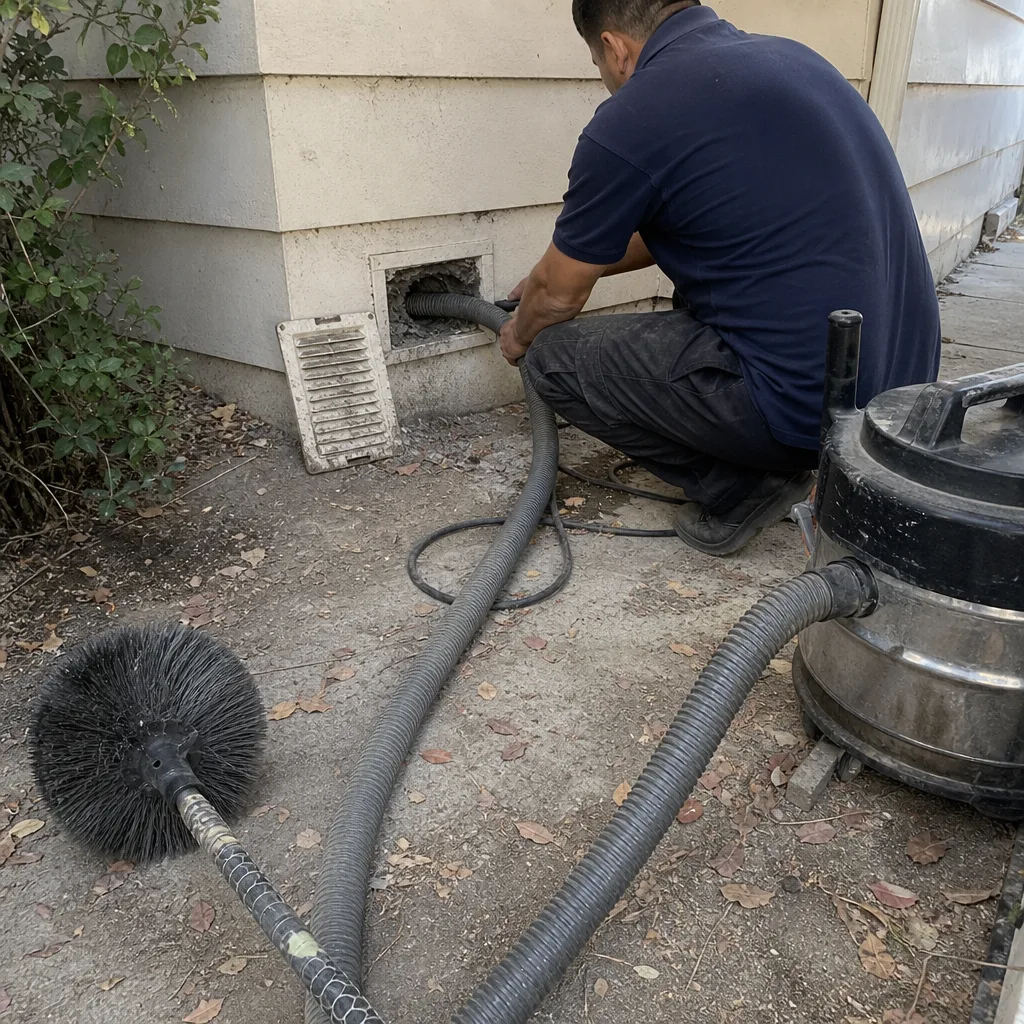 Before
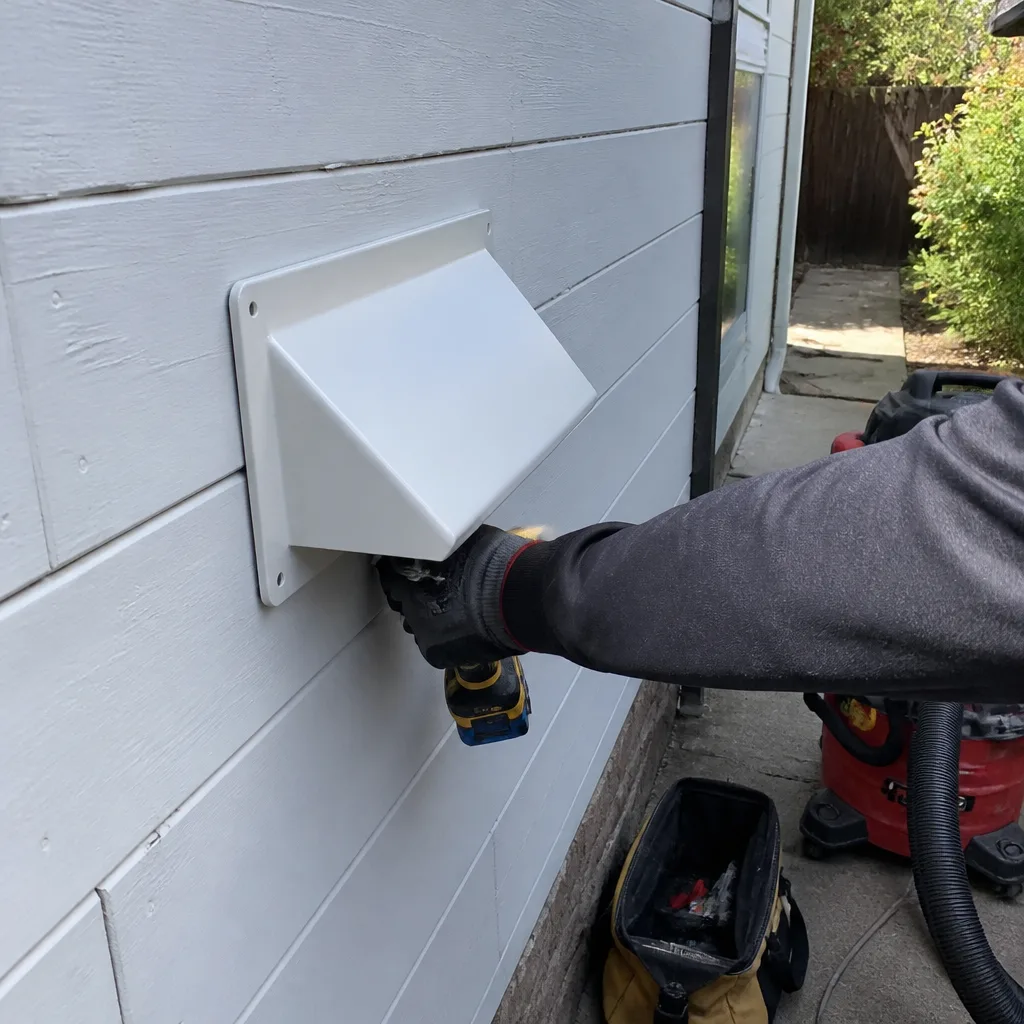 After
When to Call a Professional
Your maintenance checklist is designed to catch problems early, not to replace professional expertise. When your observations point to contamination inside the duct runs, persistent airflow loss, moisture, or rodent activity, the right move is a professional inspection. You should expect a company to show you what’s in your ducts, not just tell you. Everclear Air Duct Cleaning offers free estimates in Alameda, and we bring the equipment to verify the job: Rotobrush rotary brush systems and Nikro HEPA-rated vacuums that capture what they remove. Call (833) 620-5944 to schedule an inspection or to ask about anything on this checklist.
Frequently Asked Questions
Air duct cleaning in Alameda typically costs between $400 and $900 for a whole-home system, depending on the number of duct runs, the size of the home, and the level of contamination. Alameda’s older homes with crawlspace ductwork tend toward the higher end because access is more difficult and contamination is often more advanced. Call (833) 620-5944 for an exact quote, which includes an inspection so you know what you’re paying for before work begins.
Most Alameda homes need professional air duct cleaning every 3 to 5 years. Homes with pets, recent renovations, or residents with allergies may need service sooner. The monthly and seasonal checks in this guide help you spot when your ducts reach the point where professional cleaning is warranted.
Cheap duct cleaning quotes usually mean limited service: a technician wipes visible registers, runs a brush a few feet into the duct, and leaves the rest of the system untouched. A proper cleaning covers the entire duct run from the register to the air handler, uses professional equipment to dislodge and extract debris, and should include before-and-after documentation. Everclear Air Duct Cleaning uses Rotobrush and Nikro systems designed for full-run cleaning, not register-level surface work.
Insist on before-and-after photos or video from inside the duct runs. Any legitimate professional company can provide them. If a company refuses or says they don’t have that capability, choose a different provider. Verifiable results are the standard, not a bonus.
Yes. Alameda’s marine layer and rainy season create condensation inside ductwork that runs through unconditioned crawlspaces and attics. Wet dust creates clogging and biological growth risk. Homes east of Park Street with pier-and-beam foundations are especially vulnerable because crawlspace humidity is consistently high.
A clean filter protects the furnace and ducts from new incoming debris, but it does nothing for what’s already accumulated inside the system, especially in homes with 20-plus-year-old ductwork common in Alameda. If your monthly register checks turn up dark residue or airflow problems, filter changes alone won’t solve it. Call (833) 620-5944 for a free estimate on a professional cleaning.
The Bottom Line
A useful air duct maintenance checklist is built around what you can see and verify, not vague reminders to change a filter. For Alameda homeowners, that means monthly register inspections, seasonal checks keyed to the rainy season, smartphone-based pressure trend tracking, and a dated photo record of duct condition. When those checks point to contamination or leakage, the response is professional cleaning or repair. Everclear Air Duct Cleaning serves Alameda with professional-grade equipment, full-system service scope, and the documentation to prove the work. Keep the checklist, trust your observations, and call when the evidence says it’s time.
Written by the team at Everclear Air Duct Cleaning, serving Alameda since 2017.