
Last updated November 3, 2026
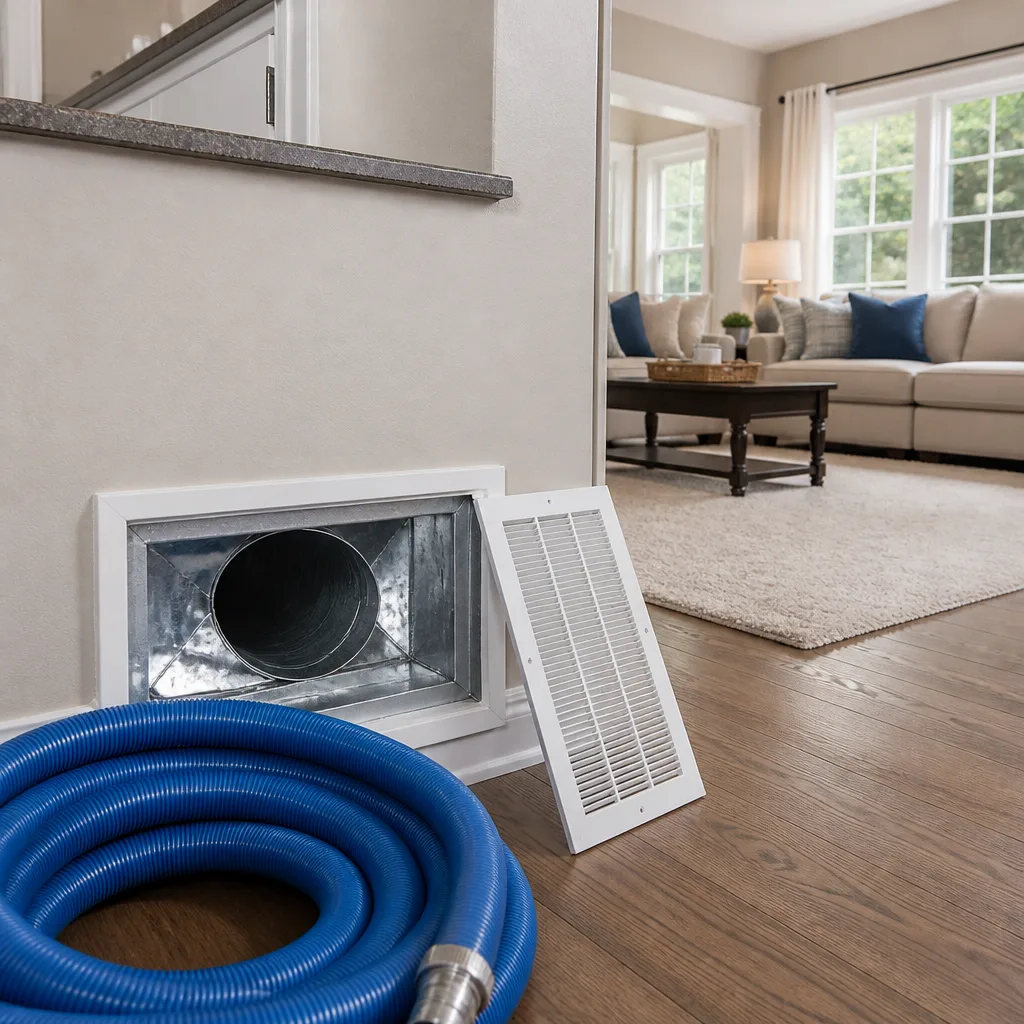 Whole-home duct cleaning
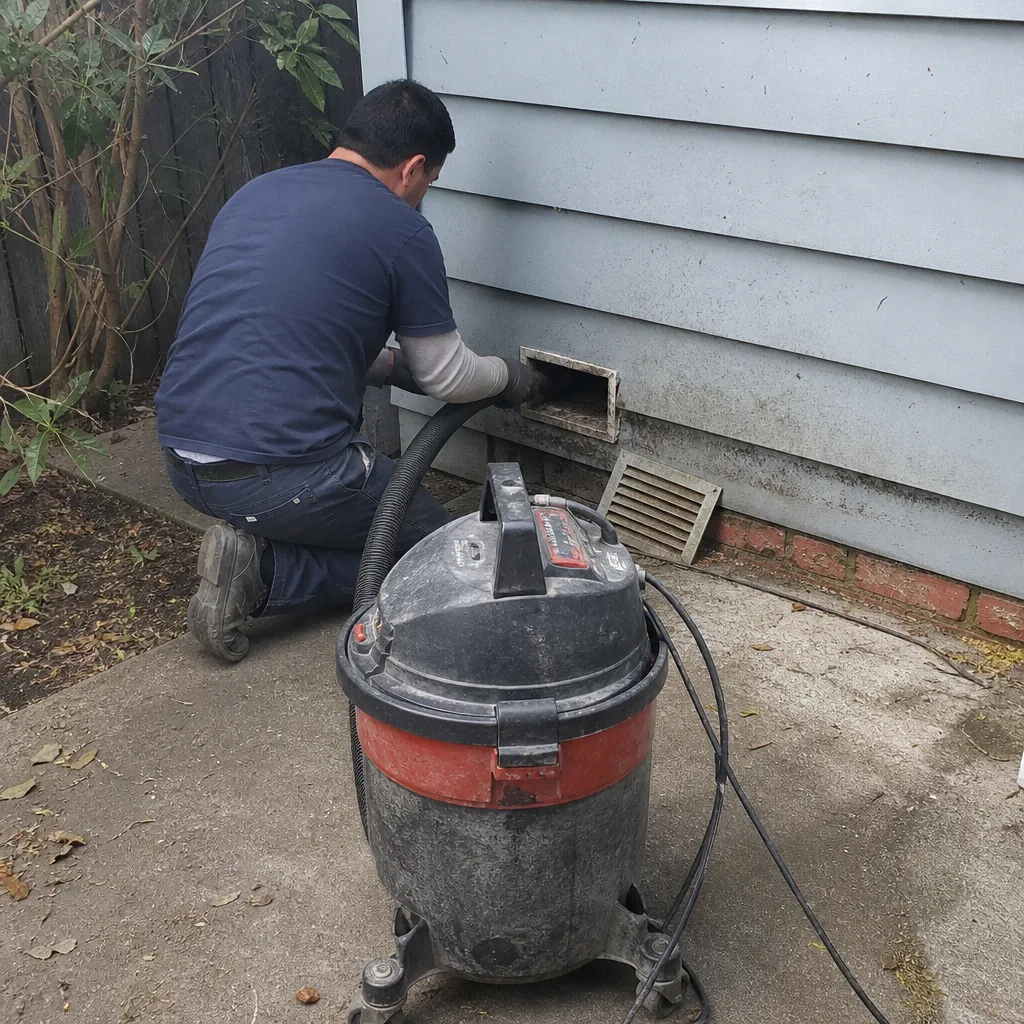
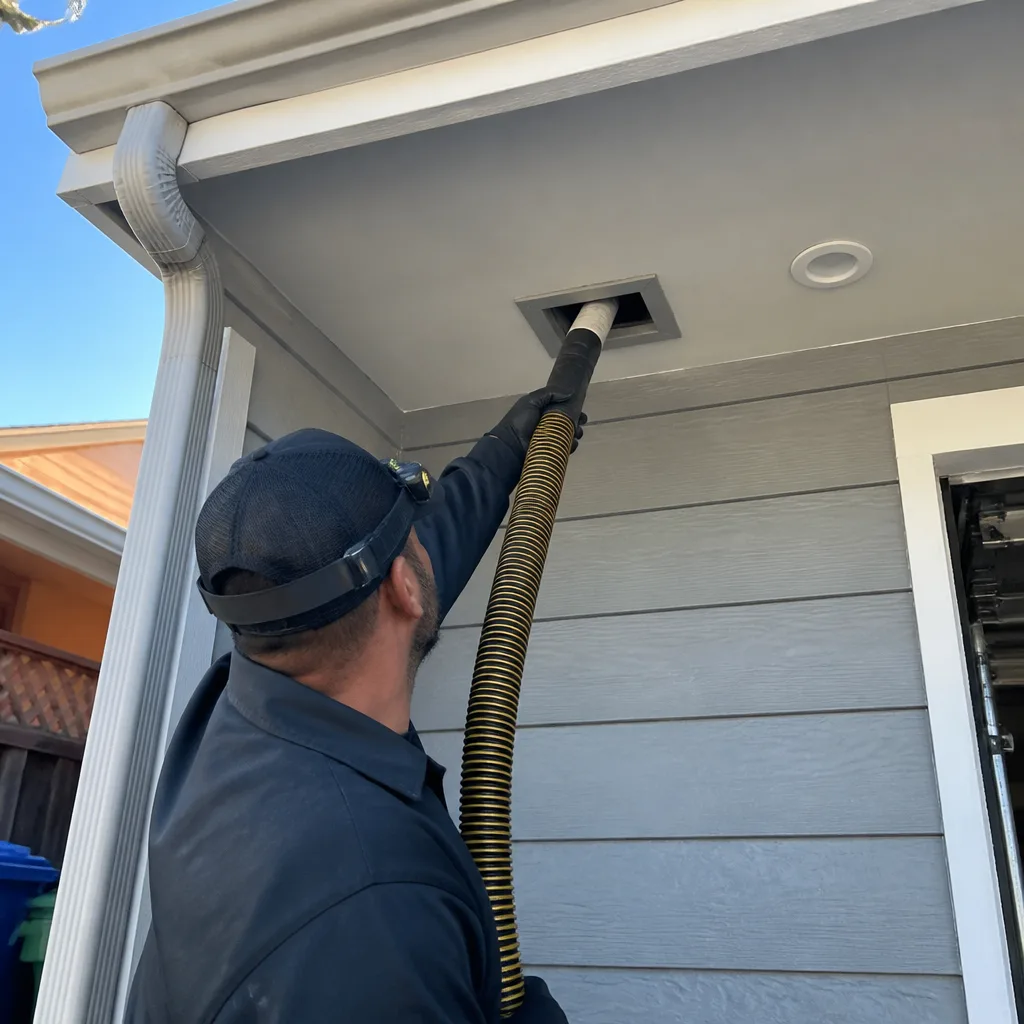
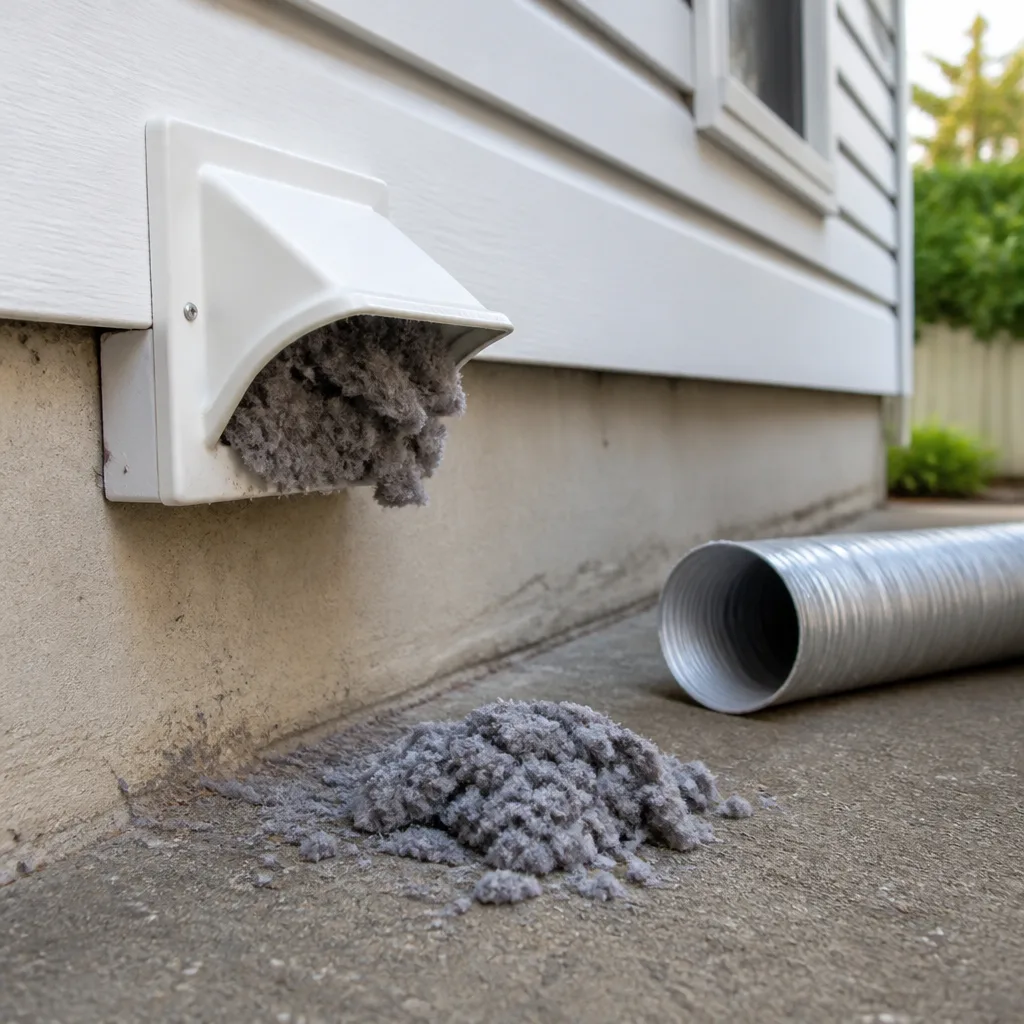 Dryer vent cleaning
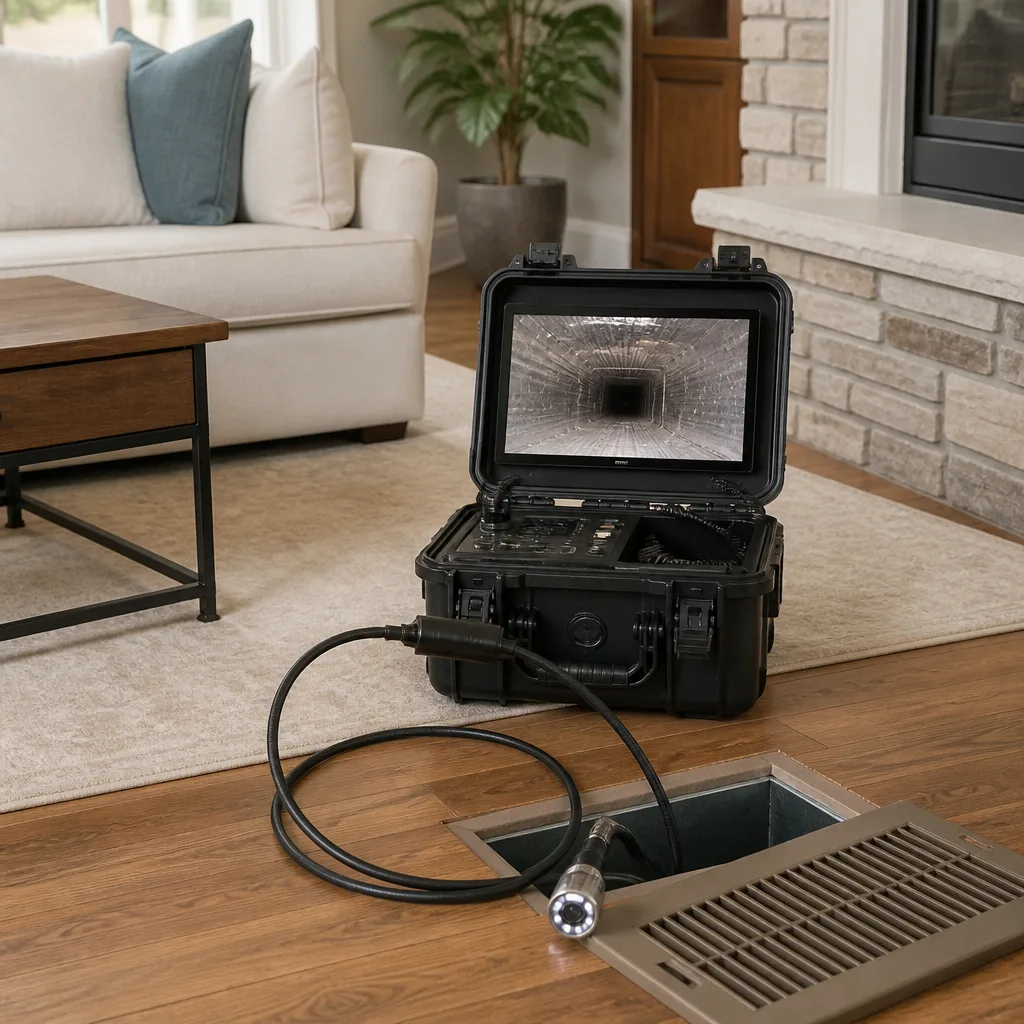 Camera inspection
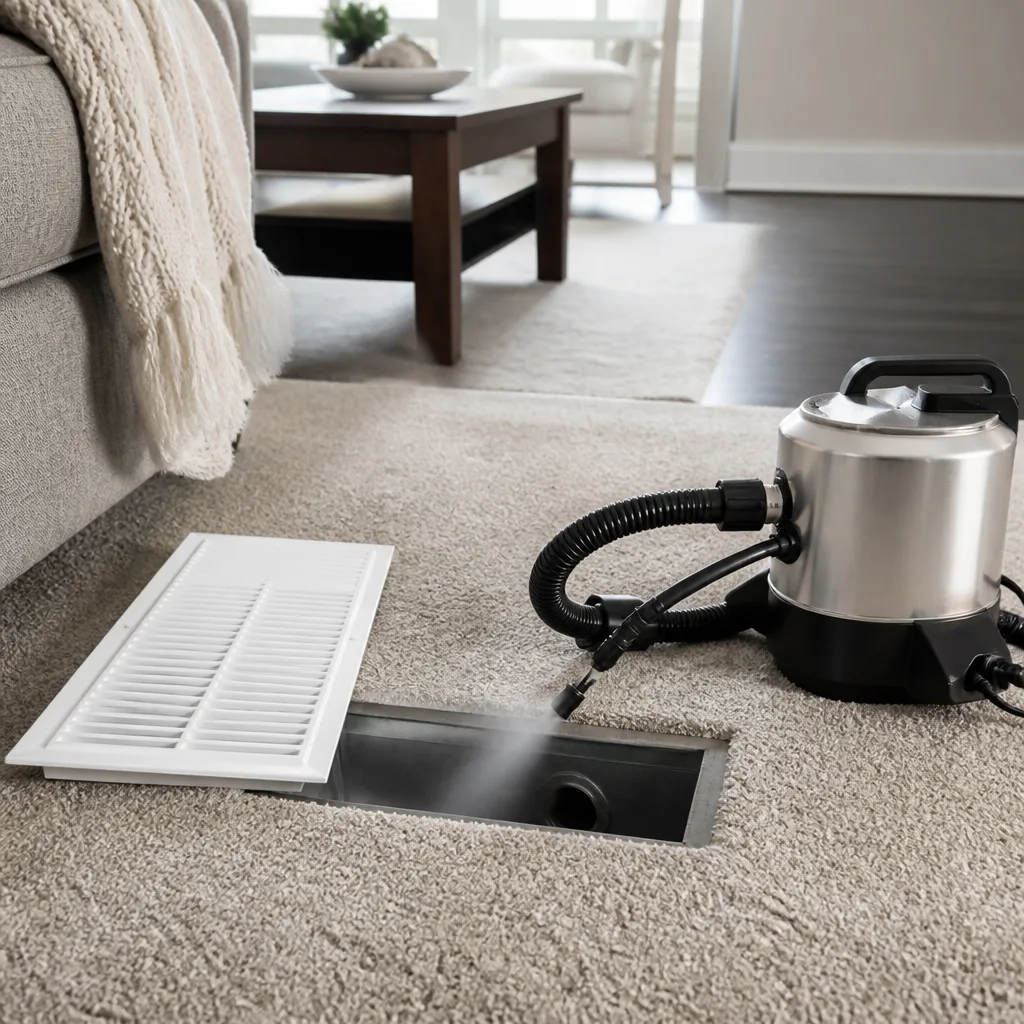 Sanitizing & deodorizing
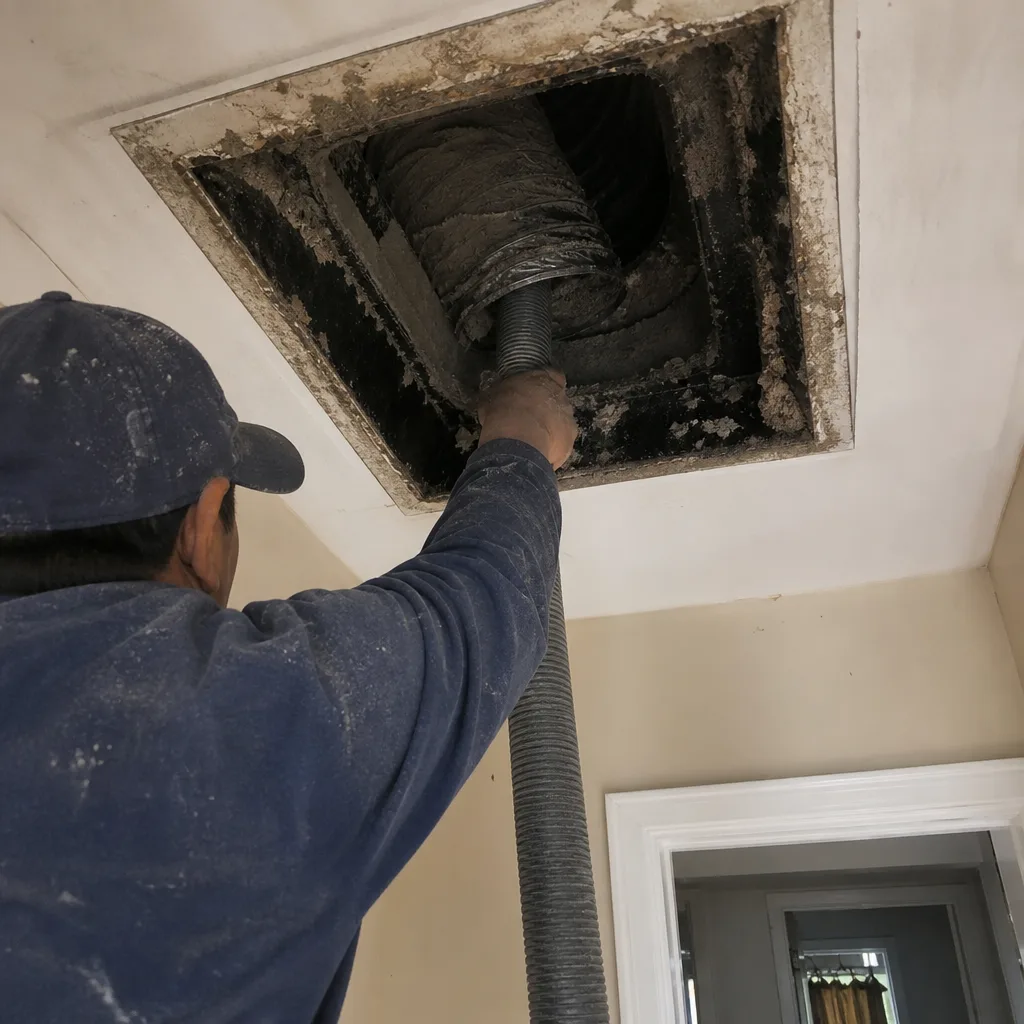
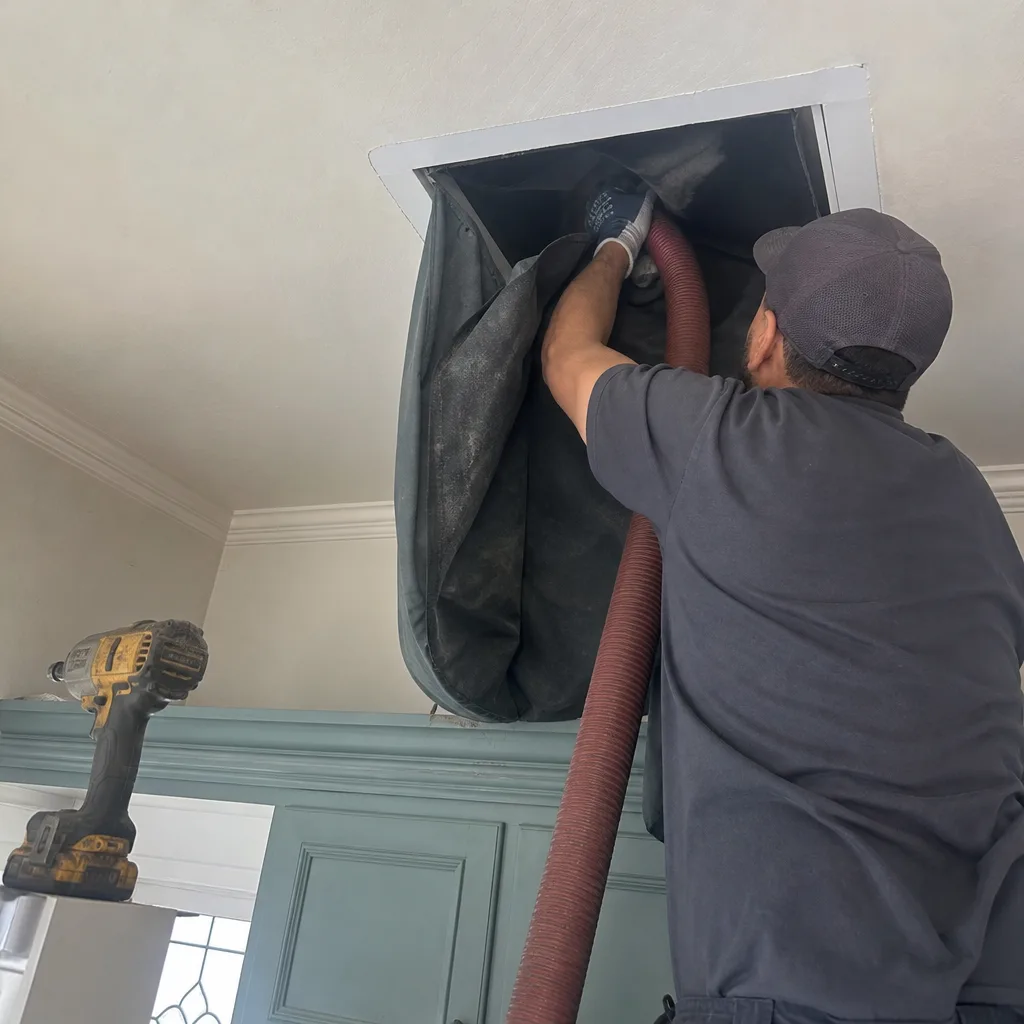
Whole-system duct and dryer vent check with before-and-after photos - you see exactly what came out of your vents
That "$99 whole-house special" is a bait ad - the real number appears once they are in your hallway, or the "clean" is a shop-vac at the register. We photograph the inside of your ducts before and after instead.
Choosing the Right Air Duct Cleaning Brand: A Buyer’s Guide for Alameda
Two companies can both show up at a house in Alameda with a hose and call it duct cleaning. One is running a trailer-mounted HEPA system pulling 15,000 cubic feet per minute of negative pressure through the ductwork. The other is running a portable unit from a big-box store that struggles to hold suction past the first twenty feet of flex duct. The inside of your ducts knows the difference, and so will your lungs. This guide and our Complete Air Duct Cleaning Guide for Alameda Homeowners explain how to evaluate duct cleaning companies by the equipment they bring to the job, because the machinery is the most reliable proxy for what actually happens inside your system. If you’ve been burned by a cheap cleaning before, or you suspect your ducts haven’t been touched since the Clinton administration, this is written for you.
Quick Answer
Choosing the right air duct cleaning company in Alameda comes down to one question you can ask over the phone: what equipment are you bringing, and does it include a HEPA-filtered negative pressure collector? Companies that run professional-grade systems from Rotobrush, Nikro, and Abatement Technologies have the physical capability to remove the debris that entry-level equipment leaves behind. Ask for equipment brand names, CFM ratings, and HEPA certification before you book. Check out our Air Duct Cleaning in Alameda page for what a full-system job should include.
Styles & brands we work with
- Whole-home duct cleaning
- Dryer vent cleaning
- Camera inspection
- Sanitizing & deodorizing
Table of Contents
- The Equipment Tiers That Actually Matter
- Brand Names to Know in Professional Duct Cleaning
- Why HEPA-Rated Collection Is Non-Negotiable for Allergy and Asthma Homes
- How to Evaluate a Company’s Equipment Commitment Before They Show Up
- What Full-System Cleaning Means in Terms of Equipment
- What Alameda’s Housing Stock and Climate Mean for Duct Cleaning
- Common Mistakes to Avoid
- When to Call a Professional
The Equipment Tiers That Actually Matter
Duct cleaning equipment falls into a few broad categories, and the gap between them is stark. Understanding these tiers helps you recognize what you’re paying for. The portable units some companies carry into your home typically generate between 400 and 800 CFM of airflow. They use a small rotating brush and a pleated filter, and they’re designed for light duty. In our experience serving Alameda homes, these units can handle a register clean-out but physically cannot remove the crusted debris that builds up along the walls of return ducts and main trunk lines.
Mid-tier equipment includes larger portable units and small gas-powered vacuums that produce 2,000 to 4,000 CFM. These can pull more debris, but they still rely on filters that exhaust back into the living space. That means anything the filter doesn’t catch gets redistributed through the home. For a homeowner with allergies in Alameda, that’s a problem, not a solution.
Professional-grade systems are the ones we run at Everclear Air Duct Cleaning home. Trailer-mounted diesel and high-output electric units produce 15,000 CFM or more of negative pressure. When paired with HEPA-rated filtration, this class of equipment creates a vacuum strong enough to collapse the duct walls inward during cleaning, which dislodges debris that a brush alone would leave behind. The filtration captures 99.97% of particles down to 0.3 microns. That’s the difference between cleaning the ducts and moving dust from the ducts to the carpet.
Here’s what the tiers look like side by side:
- Portable shop-style units (400-800 CFM): Good for register clean-outs; cannot maintain suction past short flex runs; filter exhaust recirculates into the home.
- Mid-tier portable and small gas units (2,000-4,000 CFM): Better pull, but still underpowered for long trunk lines; filtration is often inadequate for fine particulate.
- Professional truck-mounted and trailer systems (12,000-15,000+ CFM): Full negative pressure through the entire duct system; HEPA filtration captures fine debris; agitation tools combined with suction for source removal.
If a company can’t tell you the CFM rating of its equipment, that’s an answer in itself. A technician who runs this gear every day knows the specs cold.
Brand Names to Know in Professional Duct Cleaning
Most homeowners never think to ask what brand of equipment a duct cleaner uses. That omission is exactly what separates a thorough cleaning from a superficial pass. Professional duct cleaning brands are engineered for specific functions, and a contractor who can name their tools is a contractor who has invested in doing the work properly. If they rent generic equipment per job, there’s a reason they haven’t bought their own.
Rotobrush systems are the workhorse of duct agitation. The brand has been manufacturing rotary brush duct cleaning equipment for decades, and their brushes are built to reach into supply runs and scrub the walls of the duct. A rotating brush head spins at high speed while a vacuum pulls the dislodged debris outward. This combination matters: agitation plus suction is what removes debris, not suction alone. If a company runs only suction without a rotating brush, they’re leaving behind the film and crust that adhere to duct surfaces.
Nikro builds HEPA-rated vacuum collection units for the professional restoration and remediation industries. Their negative air machines and duct vacuums filter exhaust through certified HEPA media before returning air to the space. We run Nikro equipment on Alameda jobs because the filtration standard matters. A unit labeled “HEPA” is not the same as a unit certified to HEPA standards. True certification means the filter has been tested and meets the 99.97% capture threshold. Counterfeit or loosely labeled filters do not.
Abatement Technologies is a name you’ll hear in mold remediation and lead abatement. They manufacture negative air pressure machines and containment systems designed to keep contaminated debris from spreading during removal work. In duct cleaning, this approach translates to containing what comes out of the ducts, not just blasting it into the room and hoping for the best. A company that runs Abatement Technologies containment equipment is approaching the job with a remediation mindset, not a housekeeping one.
When you call a duct cleaning company in Alameda, ask them what they’re bringing by name. If the answer is “a vacuum truck” without specifics, ask more questions. If the answer is “Rotobrush agitation with Nikro HEPA collection and Abatement containment,” you’re talking to someone who does this for a living.
Why HEPA-Rated Collection Is Non-Negotiable for Allergy and Asthma Homes
If anyone in your Alameda household has allergies, asthma, or any respiratory sensitivity, HEPA-rated collection is the single most important feature of a duct cleaning job. Here’s the reason: during source-removal cleaning, the agitation tool knocks loose every particle that has been settling in the duct system, including dust mites, pollen, pet dander, and mold spores. If the collection side of the system is not HEPA-filtered, those particles pass through the vacuum and exhaust directly into the room you’re sitting in. You’ve just taken allergens that were lying dormant in the ducts and aerosolized them into the living space.
HEPA filtration captures 99.97% of airborne particles at 0.3 microns, the size range that penetrates deepest into lung tissue. Pollen grains are generally larger, between 10 and 100 microns. Pet dander runs from 5 to 10 microns. Dust mite fragments and mold spores fall in the 2 to 20 micron range. A HEPA filter catches them all. A standard pleated filter catches the larger ones and lets the fine stuff through.
One clarification: a sticker that says “HEPA” is not the same as a certified HEPA filter. True HEPA media is tested and labeled to meet the federal standards for particulate removal. If you’re evaluating a company, ask whether their HEPA filters are certified for the unit they’re running. A technician who knows the difference will have a straightforward answer. A technician who dodges the question is probably running a commodity filter.
Alameda’s climate adds a layer of urgency here. The marine air from the bay keeps humidity high, which means dust and pollen that enter the ducts tend to stick around rather than dry out and blow through. Pet dander from the high concentration of dog and cat households in the East Bay accumulates in thick layers. For families dealing with allergies year-round, the Air Duct Cleaning in Alameda page outlines what full-system cleaning involves.
How to Evaluate a Company’s Equipment Commitment Before They Show Up
You can learn a lot about a duct cleaning company before anyone steps foot in your Alameda home. The evaluation starts on their website and continues with the first phone call. For more guides & resources, see our blog. Here’s a step-by-step method for separating professional operations from companies running commodity gear.
- Look for equipment names on the website. A company that has invested in Rotobrush, Nikro, or Abatement Technologies equipment will generally say so. If the site talks about cleaning without ever naming a tool or a brand, that’s a signal the company may not own meaningful equipment.
- Ask what specific unit they’ll bring to your job. The answer should be concrete: “a trailer-mounted system with a 15,000 CFM negative pressure vacuum and HEPA filtration.” If the answer is vague, ask about CFM and filtration. A professional can answer in seconds.
- Ask about the agitation method. Duct cleaning requires both agitation and suction. The agitation should come from a rotating brush or compressed-air whip system. Suction alone is not a complete cleaning.
- Ask how they handle the registers and returns. Source removal means creating negative pressure at the main trunk line and working outward through the system. A company that only vacuums out each register individually is not doing full-system cleaning.
- Ask about the filtration on the collection unit. Specifically, ask if the exhaust is HEPA-filtered and if the filters are certified for the equipment. If they don’t know or deflect, move on.
These questions take about three minutes to ask. The answers will tell you more than any review count or coupon price.
What Full-System Cleaning Means in Terms of Equipment
Full-system cleaning is a specific technical standard, not a marketing phrase. It means the entire duct network gets cleaned from the inside out: supply runs, return ducts, main trunk lines, plenums, and registers. Achieving that requires a specific combination of equipment working together. A partial pass is when a technician cleans the registers and the first few feet of visible duct and calls it done. You deserve to know the difference.
A complete source-removal job starts with negative pressure drawn on the entire duct system. The vacuum unit connects at the main trunk line and pulls the whole network into negative pressure. That negative pressure holds airborne debris inside the system while the agitation tool works through each branch. The agitation tool, typically a Rotobrush rotary brush, scrubs the duct walls and dislodges crusted material. The vacuum then carries that material through the system and into the HEPA-filtered collection unit.
The flow looks like this:
- Step 1: Connect the negative pressure vacuum at the trunk line and seal the system.
- Step 2: Create negative pressure throughout the duct network.
- Step 3: Run the rotating brush through each supply run and return duct.
- Step 4: Dislodged debris travels through the duct to the vacuum collection point.
- Step 5: HEPA filtration captures the particulate before air returns to the home.
- Step 6: Clean and replace registers; reseal the system.
Any step left out is a partial pass. A company running the right equipment can do this in a single visit because the tools are designed to work together. We’ve handled Air Duct Repair in Alameda alongside full cleanings when the process reveals leaks or disconnected runs, because source removal exposes the actual condition of the ductwork.
What Alameda’s Housing Stock and Climate Mean for Duct Cleaning
Alameda’s building inventory shapes how duct systems perform and why they need the right equipment to clean properly. The island has a mix of Victorian-era homes from the early 1900s, mid-century bungalows from the 1940s and 1950s, and newer construction in the Bay Farm Island and Harbor Bay areas. Each era of construction presents its own duct challenges.
The older homes in Alameda’s Gold Coast and East End neighborhoods often have retrofit ductwork running through crawl spaces and wall cavities that were never designed for forced air. Decades of use leave these systems coated with layers of dust, old insulation fibers, and the fine grime that marine air deposits. Cleaning these systems requires equipment with enough negative pressure to pull through long, irregular runs. A portable unit cannot do it.
Alameda’s location between the bay and the Oakland estuary means the air carries the moisture and salt of a coastal climate. That humidity causes fine particulate to adhere to duct surfaces instead of staying loose. In a dry climate, dust blows through a system over time. Here, it sticks and accumulates. That’s why the agitation capabilities of a Rotobrush matter more in Alameda than they would in, say, Arizona. The brush has to physically scrub the buildup off the walls.
Homes with pets add another layer. Alameda has a high rate of pet ownership, and pet dander is both fine and sticky. It coats duct walls and resists suction-only removal. Full-system cleaning with the right equipment is the only way to get it out completely. We’ve also seen that Alameda homeowners who invest in full-system cleaning notice a measurable difference in dust accumulation on furniture within the first few weeks after the job.
For dryers specifically, the Dryer Vent Cleaning in Alameda page covers the fire-safety angle, which is a separate but related concern in older homes with long vent runs.
Common Mistakes to Avoid
- Choosing by price alone. A $99 whole-house duct cleaning in Alameda is almost certainly a bait-and-switch. The equipment required to do the job properly costs more than that to operate for a day. If the price seems too low to be real, the job they’re doing is not the job you’re paying for.
- Not asking about equipment brands. This is the single most reliable signal of job quality. A company that can name its equipment has made a real investment. A company that can’t is likely renting or running commodity gear.
- Assuming all vacuums are the same. The difference between a portable shop vacuum and a truck-mounted HEPA system is enormous. One cleans registers. The other cleans ducts.
- Ignoring filtration. If the vacuum exhausts back into your home without HEPA filtration, the cleaning is redistributing fine particulate into the air you breathe. This is especially problematic in Alameda’s coastal humidity, where particles stay suspended longer.
- Skipping the questions. Three minutes of questions on the phone will tell you more than any website. Ask about CFM, agitation method, HEPA certification, and what they’ll do with the debris.
- Treating all duct cleaners as interchangeable. The equipment tier defines the job outcome. A company running professional-grade gear in Alameda will produce a different result than a company running big-box store equipment, no matter how similar the websites look.
When to Call a Professional
If your Alameda home has not had a full-system duct cleaning in the last three to five years, it’s time to schedule one. The signs are straightforward: visible dust accumulation around registers, uneven heating and cooling between rooms, allergy symptoms that worsen at home, or a musty odor when the system runs. If you’ve just completed a renovation, that’s another trigger. Drywall dust and construction debris settle into the ducts and stay there until someone removes them professionally.
If you’ve had a cheap duct cleaning before and questioned whether anything actually happened, that’s the strongest signal to call someone with the right equipment. Everclear Air Duct Cleaning offers Air Duct Cleaning services with free estimates in Alameda. Call (833) 620-5944 to schedule one.
See the difference
 Before
 After
 Before
 After
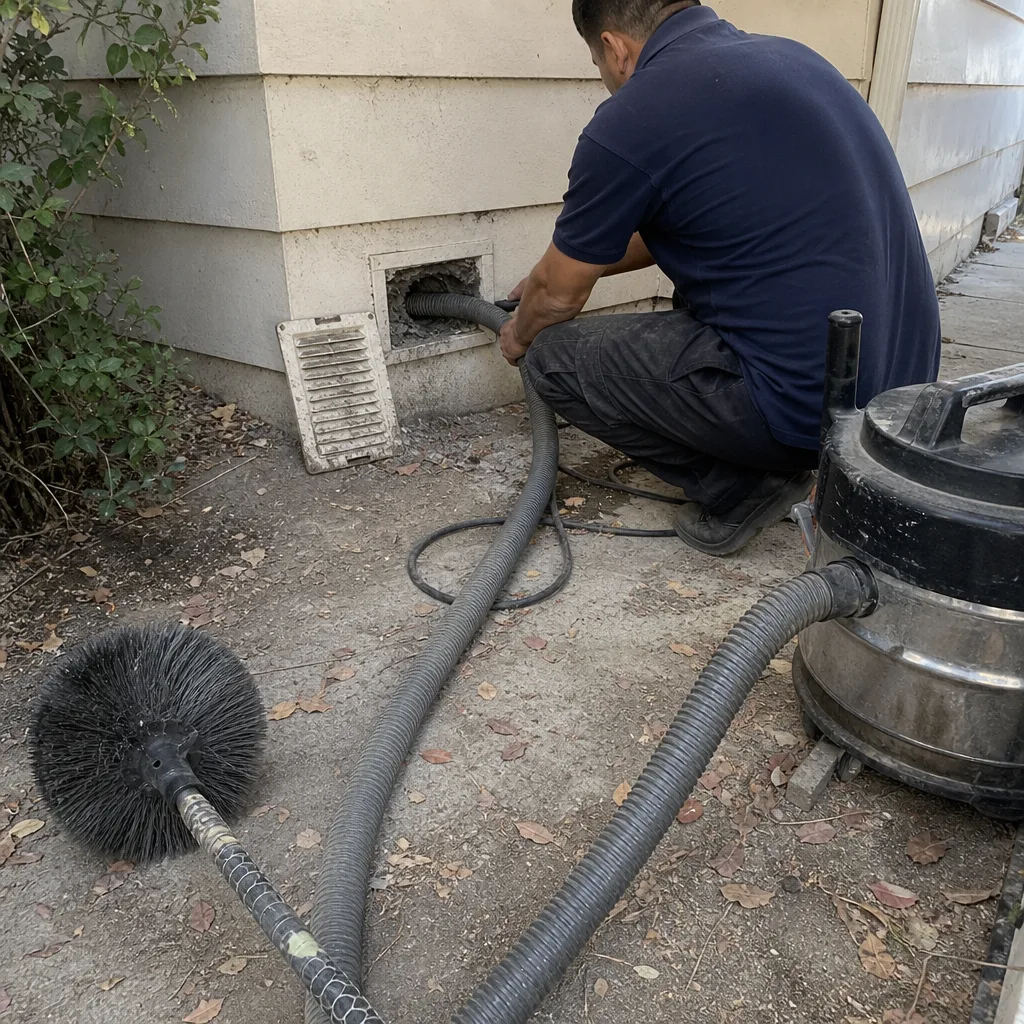 Before
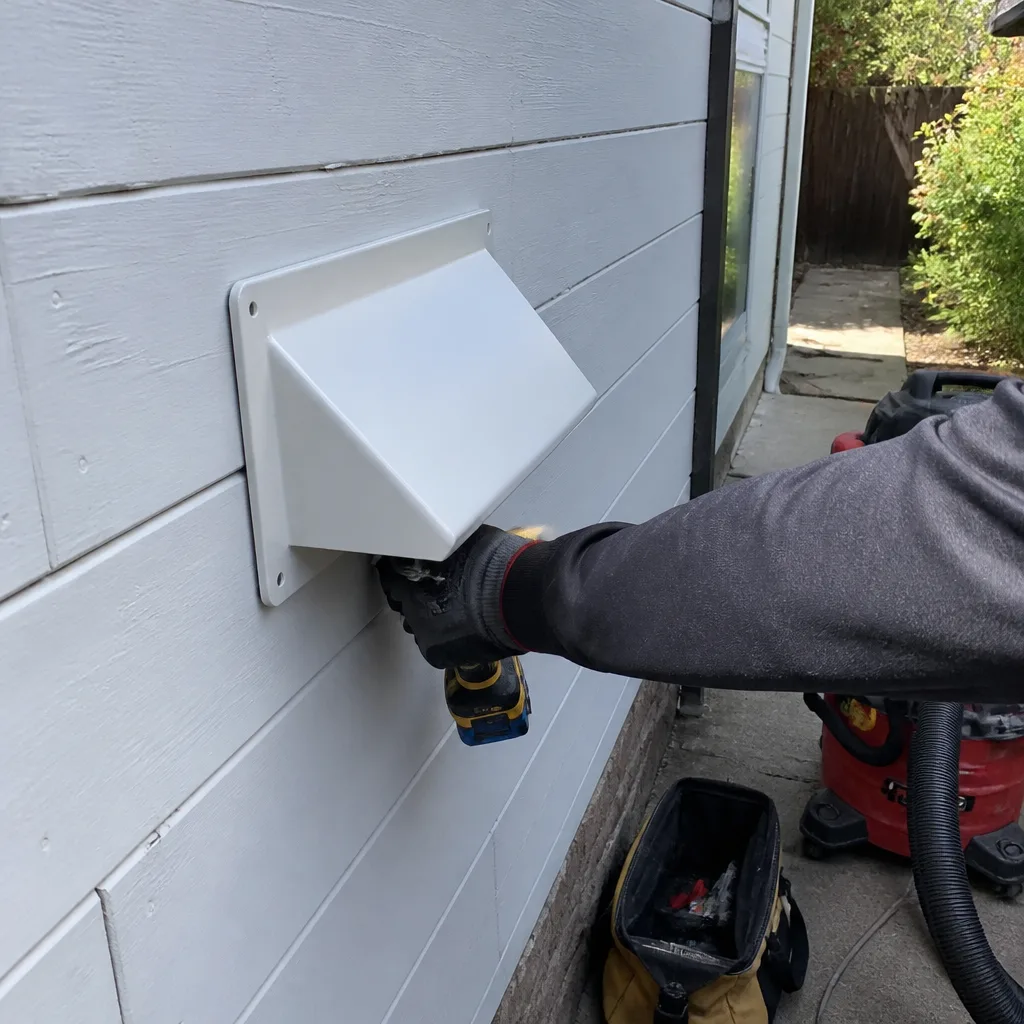 After
Frequently Asked Questions
The difference is equipment. A cheap cleaning typically uses a portable vacuum that removes loose dust from the first few feet of the register but leaves the rest of the system untouched. A professional cleaning uses negative pressure equipment with HEPA filtration and rotary agitation to remove debris from the entire duct network. You can verify the difference by asking the company what equipment they run and what CFM their vacuum produces.
Ask for before-and-after verification. A professional company should be able to show you what the inside of the ducts looked like before cleaning and after cleaning. This can be done with camera inspection or access points that let you see into the trunk line. At Everclear Air Duct Cleaning, we believe the work should be visible and confirmable, which is why we show what we found and what we removed. Call (833) 620-5944 to discuss verification options for your Alameda home.
If anyone in your home has allergies, asthma, or respiratory sensitivity, yes. HEPA filtration captures 99.97% of particles down to 0.3 microns, preventing the fine dust, pollen, and dander that gets dislodged during cleaning from being blown back into your living space. Without HEPA filtration, a cleaning can temporarily worsen indoor air quality. Ask any company you’re considering whether their collection equipment is certified HEPA.
Rotobrush systems for rotary brush agitation, Nikro for HEPA-rated vacuum collection, and Abatement Technologies for negative air and containment solutions. These are the brands used in professional and remediation-grade projects. A company that runs this equipment can clean thoroughly and control the debris it removes. A company that can’t name its equipment is a red flag.
Most homes in Alameda benefit from a full-system cleaning every three to five years. The coastal humidity causes dust and pollen to adhere to duct surfaces, and pet dander accumulates steadily in homes with animals. Homes with allergy sufferers, multiple pets, or recent renovations may need more frequent service. A professional assessment can give you a specific recommendation for your property.
Yes, when done properly with the right equipment. A full-system cleaning removes the accumulated dust, pollen, dander, and mold spores that have been settling in your ducts and recirculating through the home each time the system runs. The benefit is especially noticeable in Alameda homes where coastal humidity keeps these particles stuck in the system. For the cleaning to help, it must be a complete source-removal job, not a register-level pass. See our Complete Guide to Air Duct Cleaning in Alameda for details. Call (833) 620-5944 to ask about full-system cleaning for your home.
The Bottom Line
The brand of equipment a duct cleaning company brings to your Alameda home is the single most reliable predictor of job quality. Portable commodity vacuums physically cannot perform complete source removal, no matter how thorough the technician. Professional-grade systems from Rotobrush, Nikro, and Abatement Technologies are engineered for full-system cleaning with agitation, negative pressure, and certified HEPA filtration. Ask the equipment questions before you book. See the difference for yourself, from the inside out. For a free estimate in Alameda, call (833) 620-5944.
Written by the team at Everclear Air Duct Cleaning, serving Alameda since 2017.