
Last updated November 2, 2026
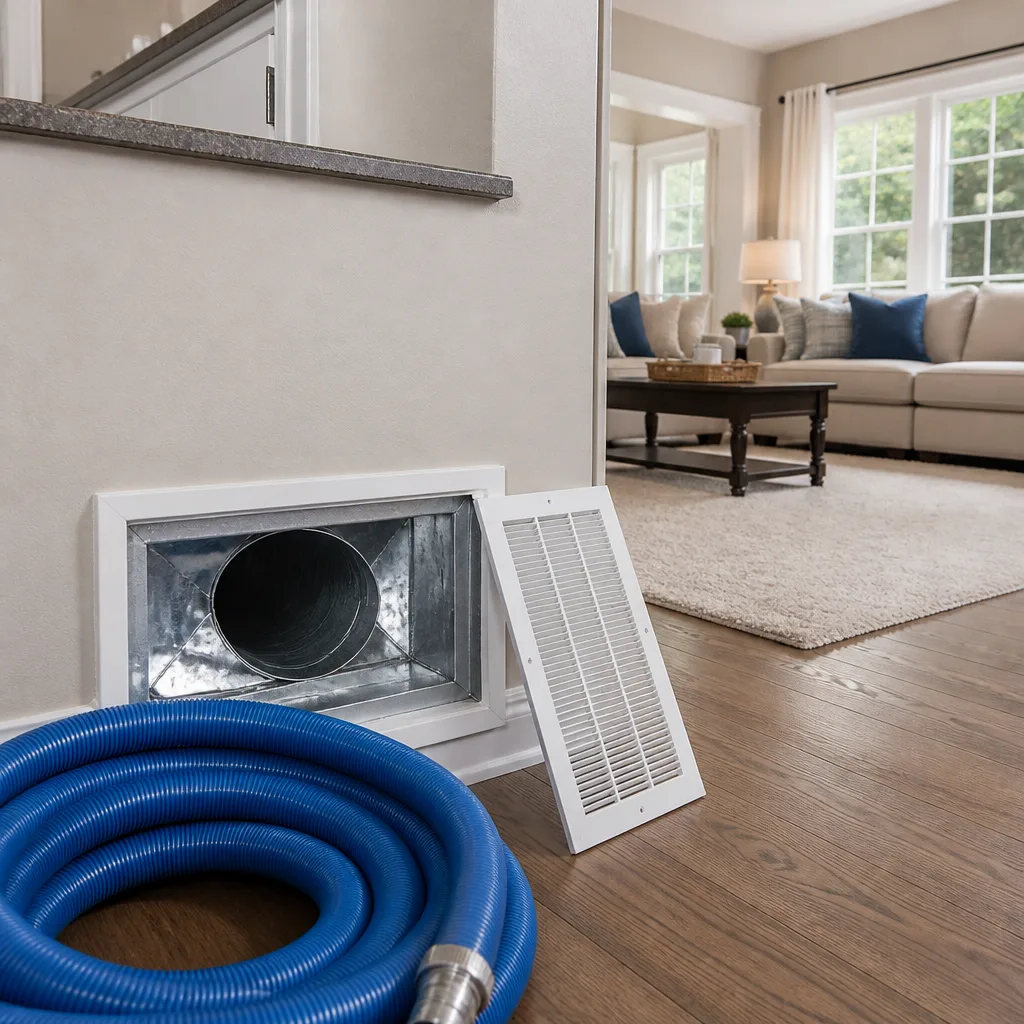 Whole-home duct cleaning
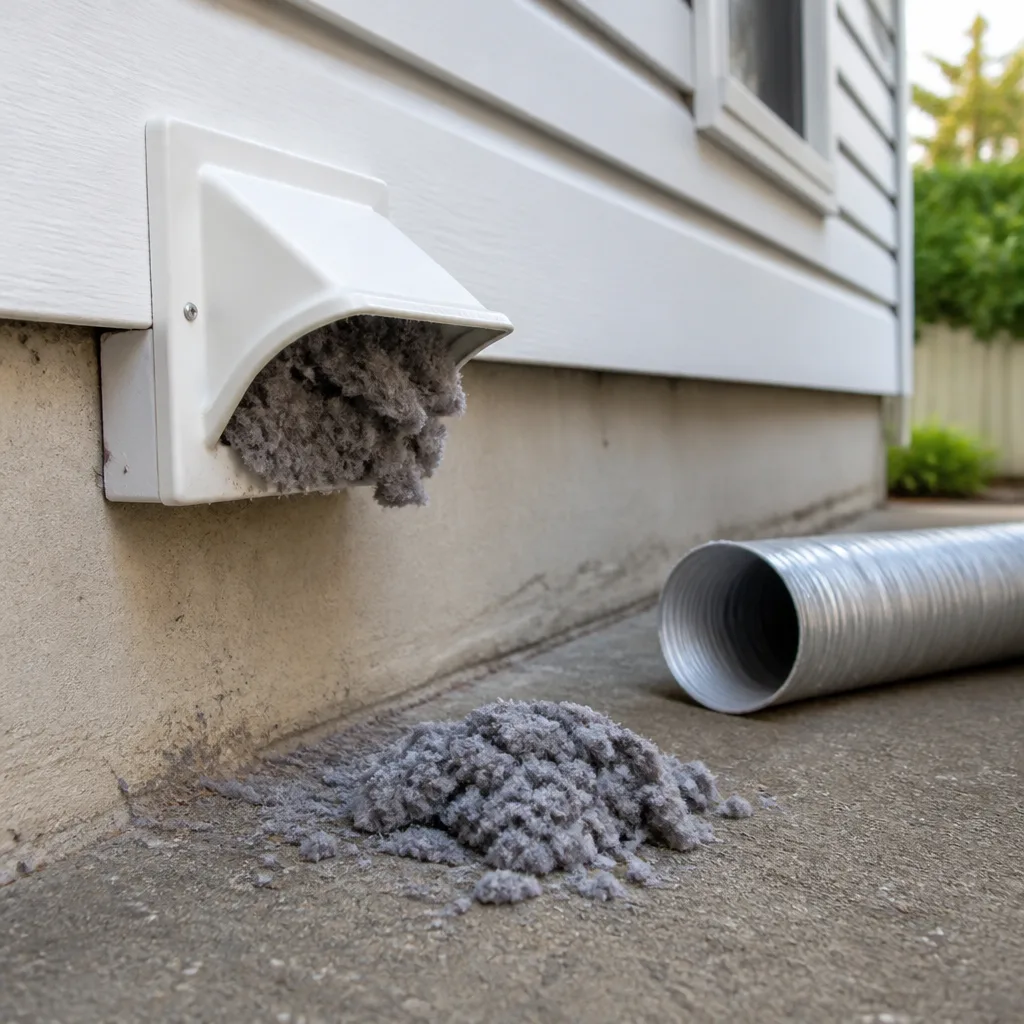 Dryer vent cleaning
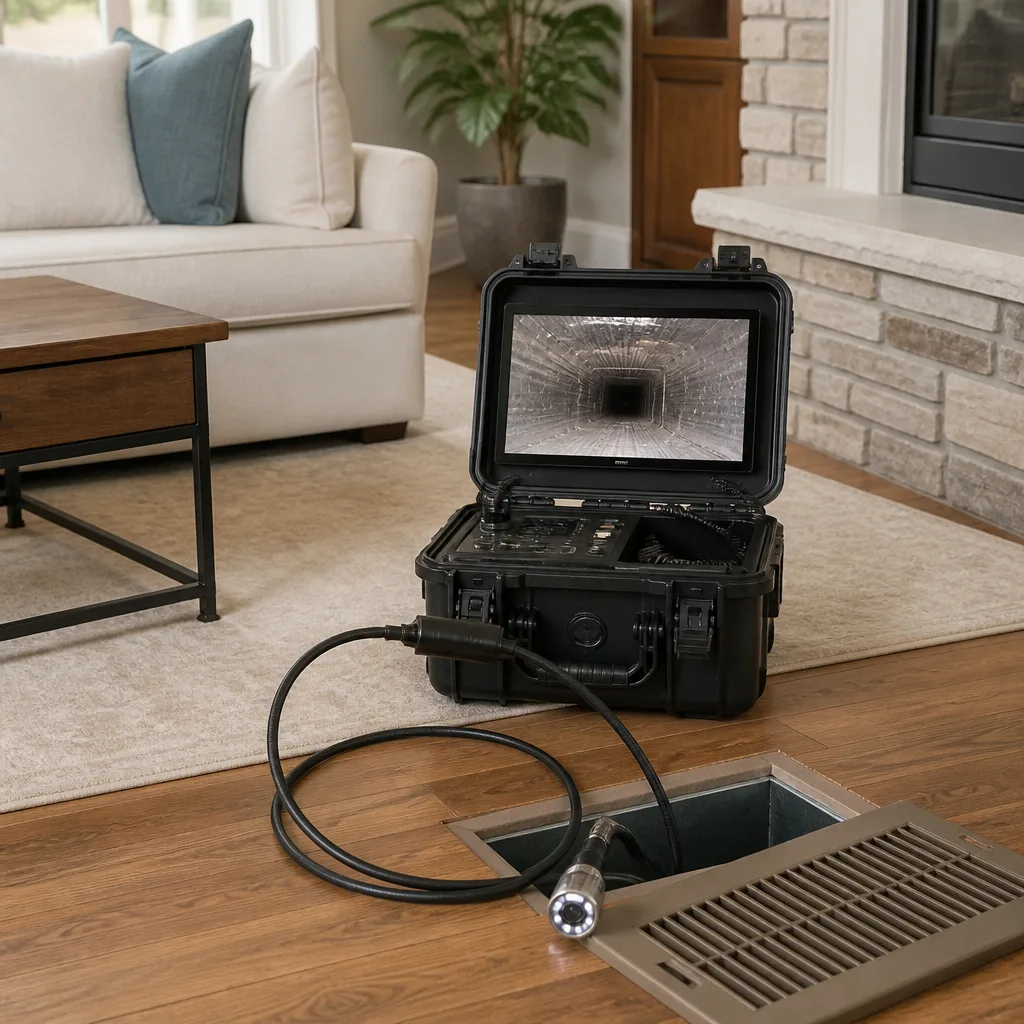 Camera inspection
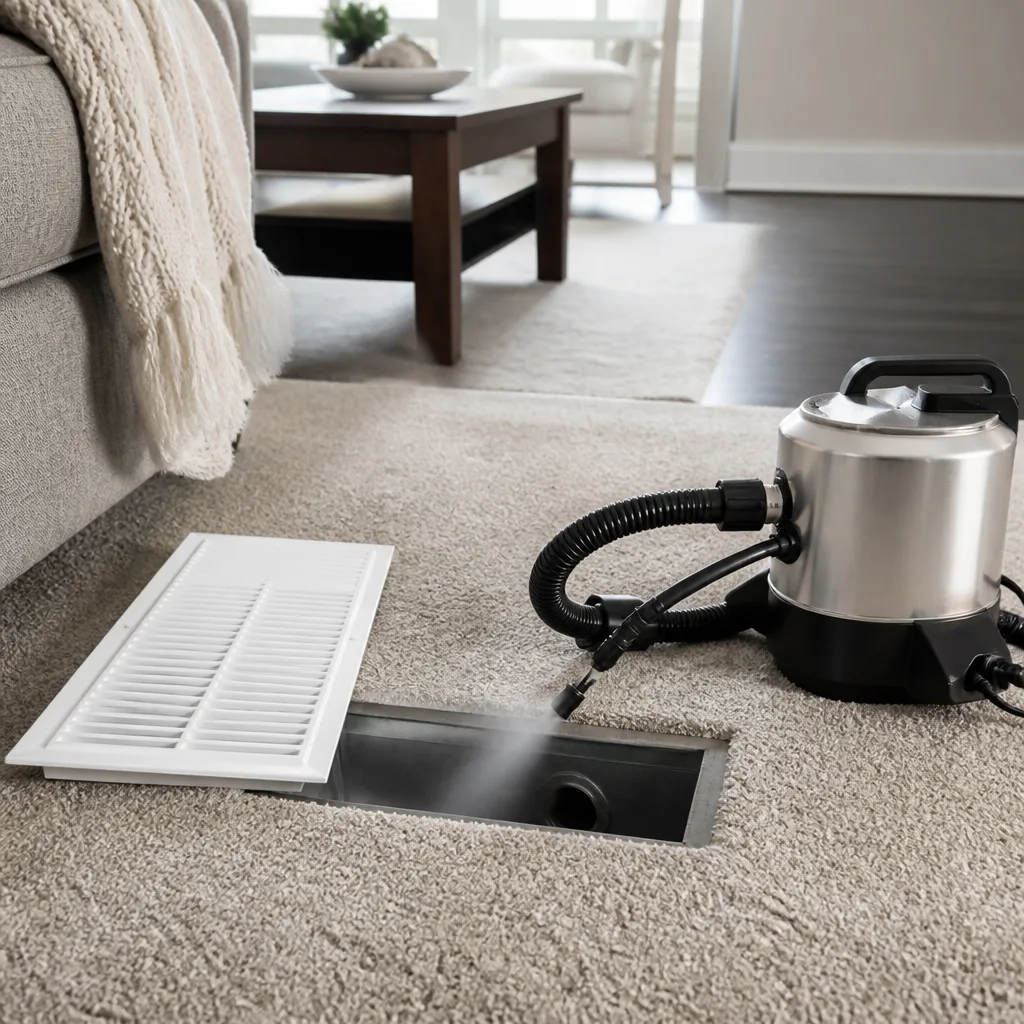 Sanitizing & deodorizing
Whole-system duct and dryer vent check with before-and-after photos - you see exactly what came out of your vents
That "$99 whole-house special" is a bait ad - the real number appears once they are in your hallway, or the "clean" is a shop-vac at the register. We photograph the inside of your ducts before and after instead.
DIY vs Professional Air Duct Cleaning: The Alameda Homeowner’s Decision Guide
A dryer vent brush kit from Amazon and thirty minutes on a ladder will clean about four feet of duct and redistribute the rest. Calling that “cleaning your ducts” is like vacuuming the top shelf and announcing the whole house is clean. Most Alameda homeowners we talk to aren’t lazy and they aren’t cheap. They simply haven’t been shown what’s actually inside their duct system, and the internet has convinced them a $45 kit does the same job as $900 of professional equipment. This guide exists to correct that with specifics: what DIY tools actually accomplish, what they physically cannot touch, what a botched attempt costs to repair, and how to verify you got what you paid for, whichever route you choose. For more guides & resources, see our blog.
Styles & brands we work with
- Whole-home duct cleaning
- Dryer vent cleaning
- Camera inspection
- Sanitizing & deodorizing
Quick Answer
DIY duct cleaning in Alameda is appropriate for accessible register faces, return covers, and short straight dryer vent runs, but it cannot clean the interior trunk lines, branch runs, or plenum where most contamination collects. Professional Air Duct Cleaning services use negative-air source removal equipment (Rotobrush rotary brush systems paired with Nikro HEPA vacuums) to remove debris from the full system rather than loosening it at the edges, and typically runs $350 to $900 for a whole home depending on system size and contamination level. If your ducts hold construction debris, pet hair accumulation, or years of prior dust, DIY will not solve the problem and may damage flex duct in the attempt.
Table of Contents
- What DIY Duct Cleaning Can Legitimately Accomplish
- What DIY Tools Physically Cannot Reach
- Why Alameda’s Older Housing Stock Makes DIY Riskier
- The Real Cost Comparison: DIY vs Professional
- The Equipment Difference: What Professional Tools Actually Do
- How to Verify Any Duct Cleaning Was Done Properly
- Common Mistakes to Avoid
- When to Call a Professional
- Frequently Asked Questions
- The Bottom Line
What DIY Duct Cleaning Can Legitimately Accomplish
Let’s be honest about what a homeowner with standard tools can actually achieve. The register faces and return covers are the visible parts of the system, the parts you can touch from a knee or a step ladder, and these are genuinely cleanable without professional help. A standard vacuum with a crevice tool removes the visible film on the register grille. A damp microfiber cloth handles the finer dust that sticks to metal. If the return air cover is removable, a homeowner can vacuum the first 12 to 18 inches of the return cavity without trouble.
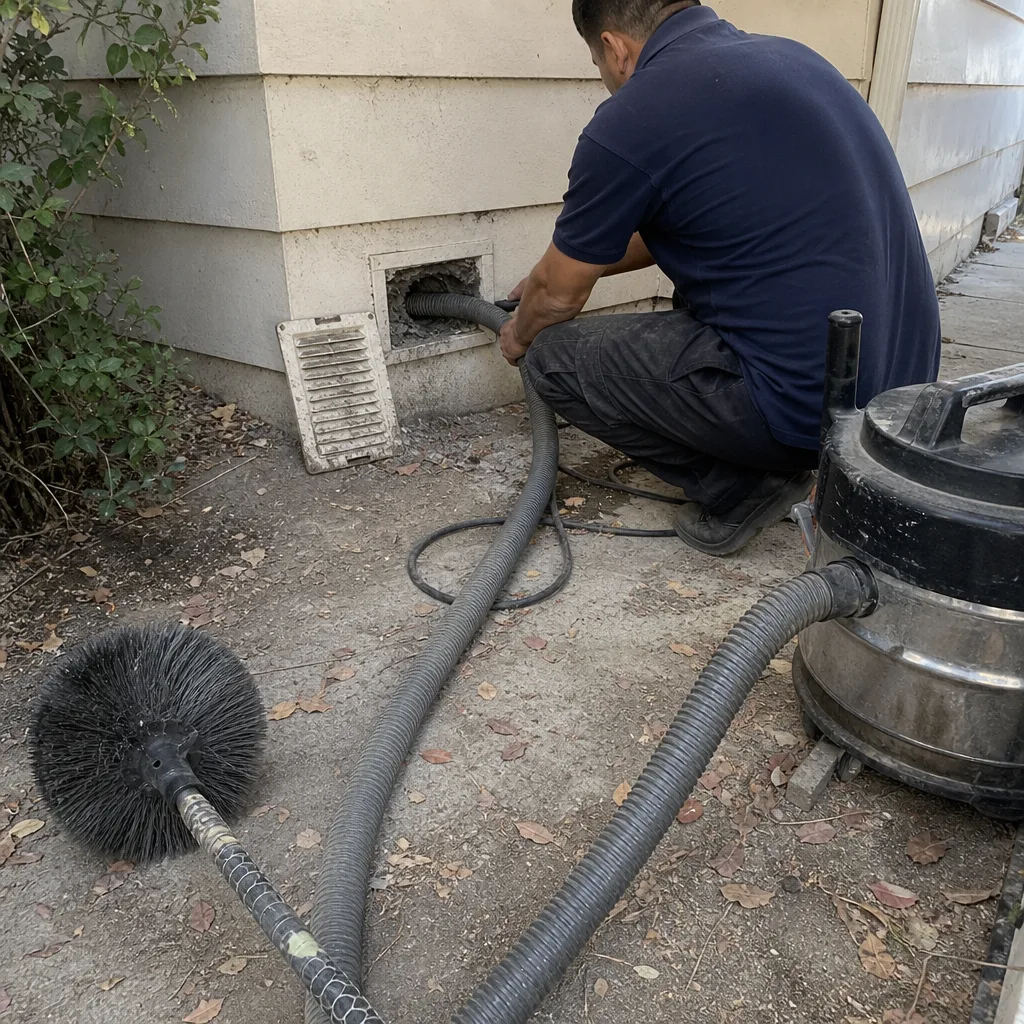
The second legitimate DIY task is a dryer vent with a short, straight path. If your dryer sits against an exterior wall in an Alameda bungalow or a mid-century rancher and the vent run is six feet or less with no elbows, a flexible rod brush kit run through from inside or outside will clear the lint accumulation. This matters because Dryer Vent Cleaning in Alameda is one of the highest-value maintenance tasks a homeowner can do themselves, assuming the run is short and accessible. Lint is flammable. A clogged vent forces the dryer to work against pressure, and that pressure builds heat. The U.S. Fire Administration attributes roughly 2,900 home dryer fires annually, with lint accumulation as the leading cause.
New construction dust removal is the third legitimate scenario. If you recently completed a remodel or a new build in Alameda’s newer developments or a gut renovation of a Victorian near Park Street, the dust in your ducts is likely fresh, dry, and sitting in the first few feet of the run from the register. This loose, surface-level dust responds to a shop vac and a basic flexible brush. What it won’t respond to is passive redistribution, which is what happens when you blow air across it without simultaneous vacuum capture. For fresh dust in short accessible runs, DIY works. For anything else, the honest answer is different.
What DIY Tools Physically Cannot Reach
The duct system in a typical Alameda home is not the six feet you can see from a register. It’s a branching network: supply and return trunk lines, individual branch runs to each room, a plenum at the furnace, and the interior surfaces of the furnace cabinet itself. A standard 15-foot flexible brush kit reaches the first bend in a branch run and then loses effectiveness. Extension rods flex, the brush head wanders toward one wall of the duct, and the user has no visual confirmation of where the tool actually made contact.
The core limitation is simple: DIY tools agitate without extracting. A rotating brush or a shop vac positioned at the register pulls air toward the register face, but it does not create negative pressure across the entire duct system. Debris that loosens but doesn’t get pulled immediately is now airborne in the same duct. It will resettle further down the line or distribute into living space on the next furnace cycle. This is not cleaning; it’s relocation.
Here’s what DIY methods leave untouched:
- Main trunk lines: The large rectangular or round ducts running the length of the crawlspace or basement. These are typically 8 to 18 inches in diameter and carry the majority of airflow. A register brush cannot reach them.
- The plenum and coil area: The box where the air handler sits, including the evaporator coil if you have central AC. This is where moisture, condensation, and debris combine.
- Flex duct interiors: Older flex duct in Alameda crawlspaces is easily torn by a stiff brush or a rod pushed past an angle. A puncture means the duct draws crawlspace air into the system until it’s repaired, which degrades air quality and wastes conditioned air.
- Return air chases: In many older homes, return air travels through cavities in the wall or floor joists, not through sealed metal or flex. These chases collect decades of fine debris and are only accessible with specialized access tools.
The honest takeaway: DIY cleaning in Alameda addresses the register faces and the first few feet of visible duct. A professional service addresses the system from the air handler outward. Those are materially different jobs.
Why Alameda’s Older Housing Stock Makes DIY Riskier
Alameda’s housing inventory spans Victorians built in the 1890s along Clinton Avenue, bungalows from the 1920s near Lincoln Park, wartime tract homes, mid-century ranchers, and newer condos near the former Naval Air Station. Each era has characteristic ductwork, and most of it is not friendly to amateur tools.
The older homes on the East End and Gold Coast frequently still have original sheet metal ducts, often with soldered seams that are now brittle. These ducts are rectangular, they run through crawlspaces and wall cavities, and the access points are few. A brush pushed through a register on the first floor may travel into a section that hasn’t been opened since the Carter administration. If the brush catches a loose section of metal or a dislodged seam, you may now have an open joint you didn’t know about, and a system that pulls unconditioned crawlspace air whenever it runs.
Homes built or renovated in the 1970s through the 1990s often use flex duct, typically with a metal coil inside an insulated sleeve. The exterior is delicate plastic or foil. A rigid brush rod with a metal tip can puncture the sleeve without the user ever knowing it. The puncture sits in the crawlspace, the furnace continues to run, and the system now draws crawlspace air through a hole in the insulation. The homeowner doesn’t notice for months, until energy bills rise or a musty smell develops. Repairs for this range from $150 for a simple section replacement to several hundred dollars if multiple runs are torn.
Alameda’s marine climate is a factor as well. Fog, damp coastal air, and mild temperature swings mean that duct interiors in many local homes never bake dry the way they would in, say, Sacramento. The interior film tends to be slightly damp and adhesive. A dry brush pushes it around; a professional system with rotary agitation and cfm-rated vacuum capture pulls it. This home climate pattern is why we use different tooling in Alameda than a desert climate contractor would use.
Finally, there’s the liability math. A DIY attempt that punctures flex duct, dislodges a sealed joint inside a wall cavity, or knocks a disconnected return back into the crawlspace now costs more to repair than the original professional cleaning would have cost. You pay for the cleaning you attempted, and then you pay for the repair. In our experience with Air Duct Repair in Alameda, the most common repair call after a DIY attempt is a torn flex run, followed closely by a disconnected return section.
The Real Cost Comparison: DIY vs Professional
Sticker price is where DIY wins, and no honest contractor will tell you otherwise. A 30-foot flexible rod brush kit costs $35 to $80 on Amazon. A standard shop vac in the garage costs nothing additional. Time investment is an afternoon. Professional whole-home duct cleaning in Alameda typically runs $350 to $900 depending on square footage, number of systems, contamination level, and accessibility. If the system hasn’t been cleaned in 15 years and has original flex duct, costs skew toward the top of the range.
But the true comparison is capability. Here’s what each approach actually touches:
| Item | DIY (typical) | Professional (typical) |
|---|---|---|
| Register faces and covers | Yes, thorough | Yes, removes and cleans |
| First 4-6 feet of accessible duct | Partial, brush reach only | Yes, full reach to trunk |
| Main trunk lines | No | Yes, access holes or full-length reach |
| Plenum and coil area | No | Yes, coil inspected and cleaned if needed |
| Flex duct interior | No, risk of tearing | Yes, with appropriate tooling |
| Dryer vent (short, straight) | Yes, with rod kit | Yes, faster, with verification |
| Dryer vent (long, multiple elbows) | No, rod can’t navigate | Yes, with rotary tooling |
| Debris capture | None, redistribution | Nikro HEPA vacuum, source capture |
| Verification of work | Visual at register face only | Before/after photos, scope footage |
The cost conversation also includes what happens when the job isn’t done right. A punctured flex run costs $150 to $400 to replace. A dislodged sealed connection inside a wall cavity can cost the same. A clogged dryer vent that a rod kit pushed further down can force the vent cover off externally, and now moisture and lint are discharging into the wall or attic. These aren’t hypothetical; they are routine call types for repair work. A homeowner who spends $80 on a kit and then $350 on repairs has spent $430 and still hasn’t cleaned the trunk lines.
The Equipment Difference: What Professional Tools Actually Do
Here’s the part most comparisons skip: the physical difference between a shop vac and a professional duct cleaning setup. A shop vac pulls 100 to 200 cubic feet per minute (cfm) of air through a two-inch hose. A professional Nikro HEPA vacuum array pulls 2,000 to 5,000 cfm through an eight-inch or larger collection hose. That’s the difference between sipping through a straw and opening a fire hydrant.
The tools we run on Alameda jobs are Rotobrush rotary brush systems paired with Nikro negative-air collection equipment. The Rotobrush is a rotating head attached to a flexible shaft; it mechanically scrubs the duct interior while the Nikro pulls continuously, maintaining the duct under negative pressure the entire time. Debris loosened by the brush doesn’t get a chance to drift; it’s pulled into the collection unit at the point of agitation. That’s the core mechanism of source removal. The debris leaves the system entirely, into a HEPA-filtered containment unit, instead of moving from one section to another.
For contaminated or heavily soiled systems, Abatement Technologies negative air machines and containment barriers are the standard in remediation environments. We bring that same approach to residential jobs with larger contamination; the crawlspace or attic becomes a controlled zone, the debris path is isolated, and the output air is filtered before it’s discharged. Homes along the Alameda estuary with older crawlspaces and five decades of accumulated debris benefit most from this approach.
After the cleaning, additional measures like Guardsman sealing and coating products add a protective layer to the cleaned surfaces. This is outside the scope of any DIY conversation, but it explains why professional pricing sometimes includes a sealing step: the interior surface is clean, and now you have the option to seal it.
The other professional capability is what comes after the cleaning: filtration upgrades. A home with cleaned ducts but a standard one-inch fiberglass filter still pulls new debris into the system. A Honeywell media filter cabinet or an Aprilaire air-purification system upgrades the capture point at the air handler. This isn’t a duct cleaning function per se, but the person who just paid for a professional cleaning may reasonably want the result to last. Homeowners who call Air Duct Cleaning in Alameda often ask about this in the same conversation, and it’s handled in the same visit.
How to Verify Any Duct Cleaning Was Done Properly
A professional cleaning that stops at the register faces is a waste of money. You are paying for the service; you are entitled to proof. Here’s how to confirm you got source removal, not a register vacuuming.
- Demand before-and-after photos from inside the system. The contractor should have camera access or a borescope that reaches the trunk lines and plenum. The after photos should show clean duct surface, not just a clean register face. If the contractor won’t provide interior photos, you didn’t get interior cleaning.
- Ask specifically about the trunk lines and plenum. “Did you access the main trunk?” and “Did you clean the plenum and coil area?” are legitimate questions a professional can answer immediately. A vague answer means you got a register-level cleaning.
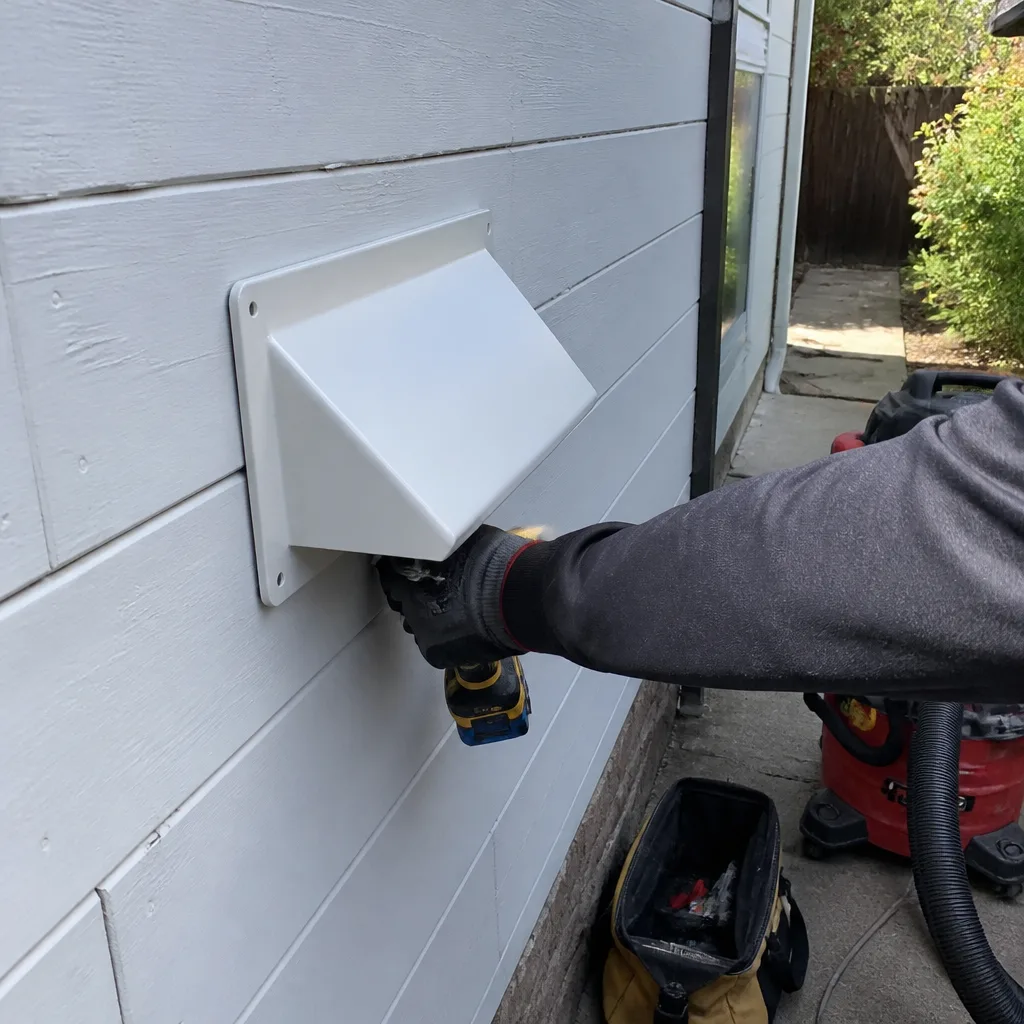
- Check the dryer vent exit cap from outside. After a dryer vent cleaning, the exterior vent cap should be visibly clear of lint and the hood should close properly. Look at the outdoor surface beneath the vent; lint should not be accumulating there within days.
- Run the system and feel the airflow. A system cleaned properly will have noticeably improved airflow within a few days. This isn’t a substitute for visual proof, but it’s a real indicator that the passages are clear.
- Ask what the contractor found. A professional who actually cleaned the system should be able to tell you what was in it: “Your return chase had a three-inch layer of plaster debris from the 1990s remodel” or “The flex run to the back bedroom had a kink we straightened.” Specific findings are the sign of real work.
If you hired a professional and receive none of this, you overpaid. If you’re doing a DIY job, the equivalent verification is honesty about what you reached: you can clean and photograph the register faces and the first few feet of duct, and nothing beyond that. Knowing the difference is the entire point.
Common Mistakes to Avoid
- Assuming a brush kit cleans the whole system. The brush reaches the length of the rod, typically 12 to 15 feet from the register face. It does not reach the trunk lines, the plenum, the return chase, or the coil area. The system is larger than the tool.
- Using a leaf blower inside a duct. This is the single worst DIY idea homeowners attempt. A leaf blower generates positive pressure, not negative. It fires debris deep into the ductwork and through the supply registers into the living space. Now the entire house is dusted with whatever was in the ducts, in an afternoon.
- Disconnecting duct sections without knowing how to reconnect them. Homeowners sometimes unhook a section of flex or a metal elbow to “get deeper.” Reconnecting a duct section in a crawlspace without the proper band and sealant creates an immediate leak. The system now breathes crawlspace air.
- Ignoring the return side. DIY attention usually goes to the supply registers, the ones that blow air. The return side pulls air back, and it’s typically dirtier. Cleaning supply registers while ignoring return covers and the return chase is incomplete in a way that matters, because the return is what feeds the filter and the coil.
- Assuming a cheap professional quote equals a good value. In Alameda, as anywhere, a $99 whole-home duct cleaning is a register vacuuming with a coupon attached. The contractor is pricing the job low because the job is small. You will get what the price buys: a visible improvement at the registers and nothing more.
- Waiting until the ducts are visibly dirty to act. The dust you can see on a register is a fraction of what’s in the system. By the time registers look bad, the interior surfaces have been collecting for years. Cleaning them at that point is more expensive and less effective than non-invasive maintenance earlier would have been.
- Doing a partial DIY job and calling it done. Cleaning the first few feet of duct and the registers, then not cleaning the rest of the system, leaves the worst contamination in place. The result is an improvement in appearance with no meaningful improvement in airflow or air quality.
When to Call a Professional
Some situations warrant professional equipment and a professional eye. If you’ve just purchased an older home in Alameda and don’t know the duct history, if a remodel just finished and construction particles are distributed throughout the system, if a smoker or pet lived in the home for a decade, if anyone in the household has allergies or asthma, or if the dryer vent runs more than 10 feet with multiple turns, call someone who can reach what you can’t. The same applies if you’ve tried DIY and the register faces look clean but the house still smells musty, or if airflow is noticeably weaker in one room than another; those are physical blockages or leaks somewhere in the system, and a brush kit won’t find them. Everclear Air Duct Cleaning offers free estimates in Alameda – call (833) 620-5944.
Frequently Asked Questions
DIY duct cleaning is effective for register faces, return covers, and short straight dryer vent runs, but it does not clean the trunk lines, branch runs, plenum, or coil where the majority of contamination accumulates. In Alameda’s older homes with original sheet metal and flex duct, those untouched areas are often the worst part of the system. If your goal is whole-system cleaning, DIY is a partial job with a misleading name. Call (833) 620-5944 for an estimate and a scope of what a professional cleaning would cover.
Professional whole-home air duct cleaning in Alameda typically runs $350 to $900 depending on system size, contamination level, accessibility, and whether the plenum and coil are included. A one-system condo on the Bay Farm side will be at the lower end; a large Victorian with original ducts and a crawlspace on the East End will be higher. Beware the $99 specials; they are register-level cleanings. Call (833) 620-5944 for an exact quote for your system.
Yes, and it’s more common than people expect. A rigid brush rod pushed through older flex duct can puncture the sleeve, creating a tear that pulls crawlspace air into the system until it’s repaired. A stiff brush can also catch a loose seam in original sheet metal and dislodge a sealed connection. Repairs for these range from $150 to $400 or more. The risk goes up in Alameda’s older housing stock, where duct materials are often brittle and connections are decades old.
Request before-and-after photos from inside the duct system, not just the register faces. A legitimate professional will have camera or borescope footage of the trunk lines, plenum, and branch runs. Ask specifically whether the trunk lines and coil area were accessed. If the contractor can’t show interior photos or answer those questions with specifics, you received a register-level cleaning regardless of what the invoice says. A professional who runs Rotobrush and Nikro equipment will be able to show you the result.
For most Alameda homes, a professional cleaning every 4 to 7 years is appropriate, shorter if you have pets, recent construction, allergies in the household, or if you’ve never had the system cleaned. See our Seasonal Air Duct Cleaning Care for Alameda: Year-Round Homeowner’s Guide for a full maintenance calendar. Homes near the estuary or with older crawlspaces tend to accumulate debris faster due to the marine climate and older duct materials. The National Air Duct Cleaners Association guideline of every 3 to 5 years is a reasonable baseline; local conditions here push many homes toward the shorter end. If airflow is noticeably weak or registers show visible accumulation, the interval is overdue regardless of calendar time.
A register vacuuming cleans the visible register cover and the first few inches of duct; it takes 20 minutes per system and doesn’t touch the trunk lines, plenum, return chase, or coil. A real duct cleaning puts the entire system under negative pressure while rotating agitation tools mechanically scrub the interior surfaces, and it produces before-and-after photos from inside the system. The difference is visible, and the price reflects it. Anything under roughly $250 for a whole home in Alameda is not a real duct cleaning.
The Bottom Line
DIY duct cleaning has a narrow legitimate role. It handles register faces, return covers, the first few feet of an accessible run, and short straight dryer vents. Everything else requires negative-pressure source removal with the equipment professionals use: Rotobrush rotary brush systems and Nikro HEPA-rated collection units, sized to move air at cfm rates a shop vac can’t approach. In Alameda’s older housing stock with its sheet metal and flex duct, the risk of DIY damage is higher than the financial savings justify. A torn flex run, a dislodged sealed connection, or a dryer vent jammed by a brush kit costs more to repair than the original professional cleaning would have cost. Whichever route you choose, verify the work: photos from inside the system, specific findings from the technician, and visible pressure test results on the dryer vent. The best service is the one you can see.
Written by the team at Everclear Air Duct Cleaning, serving Alameda since 2017.
See the difference
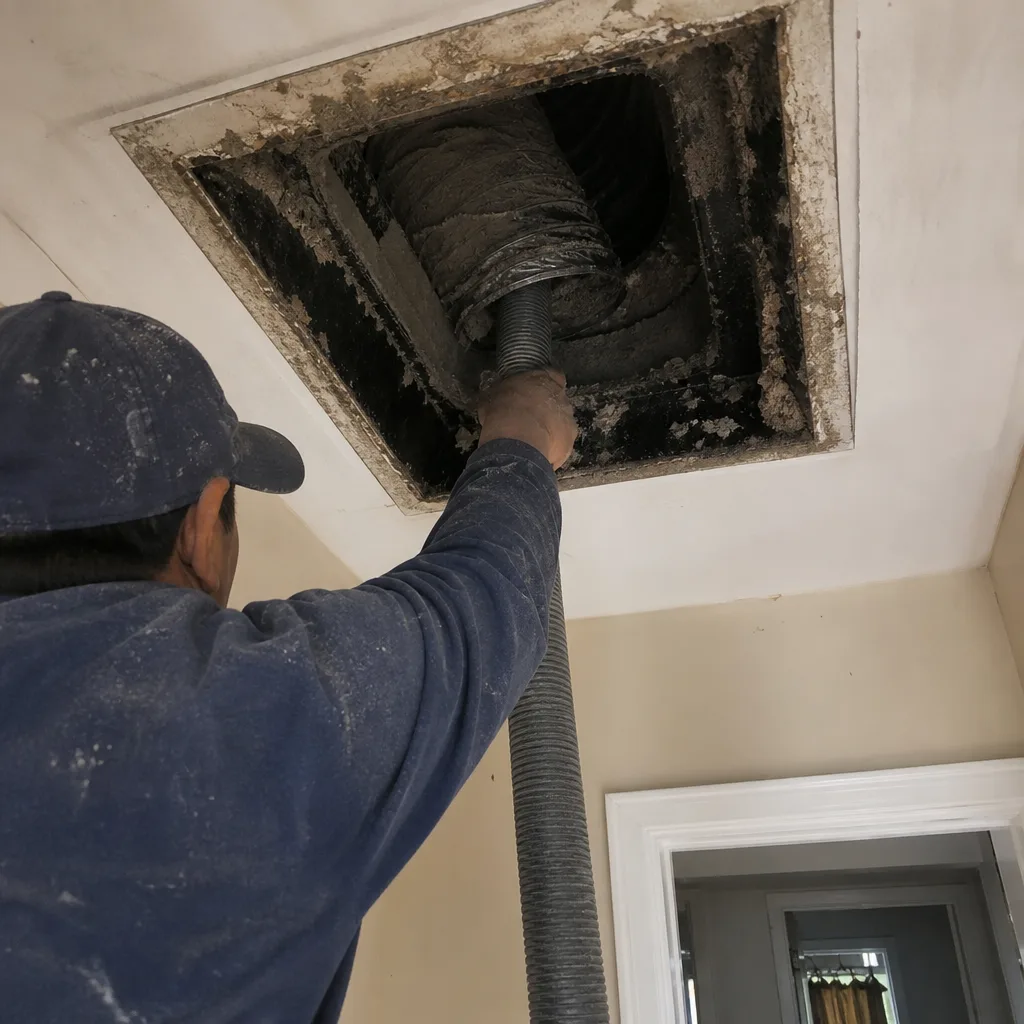 Before
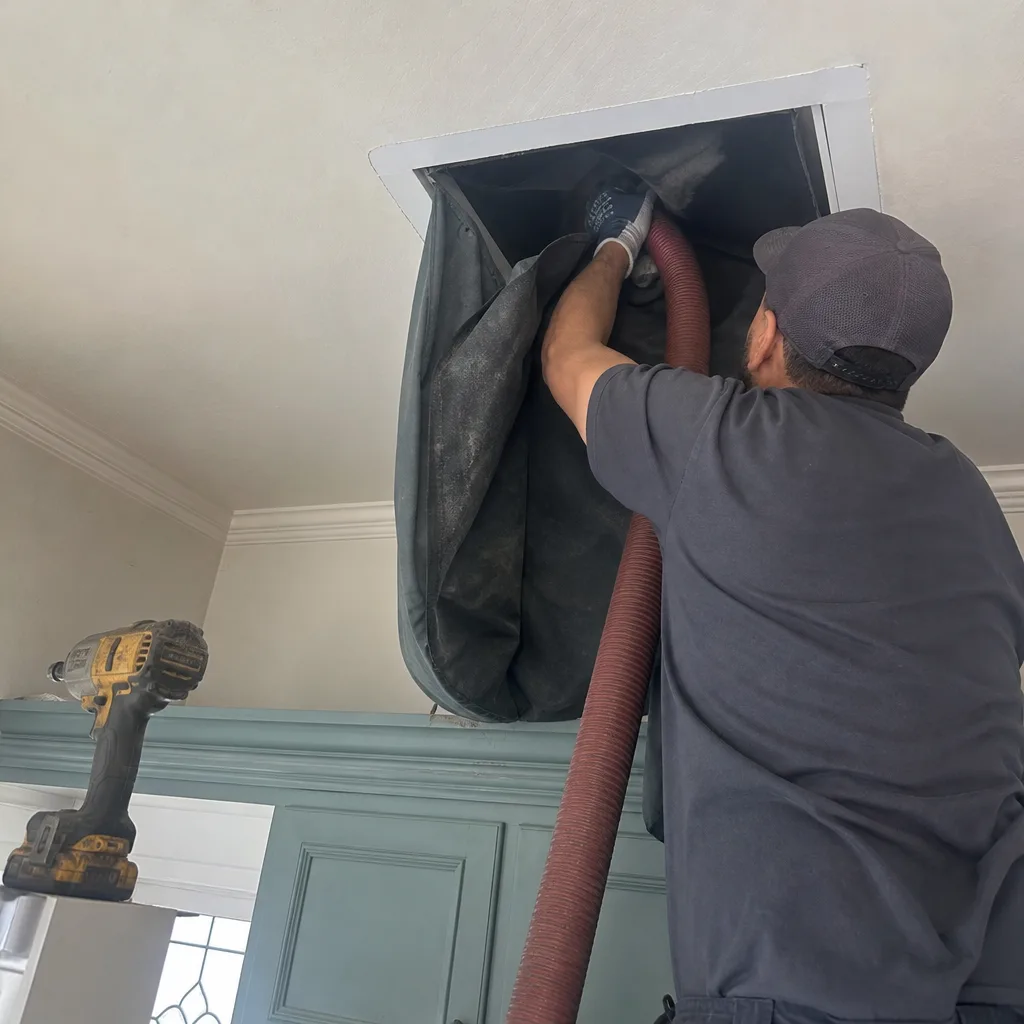 After
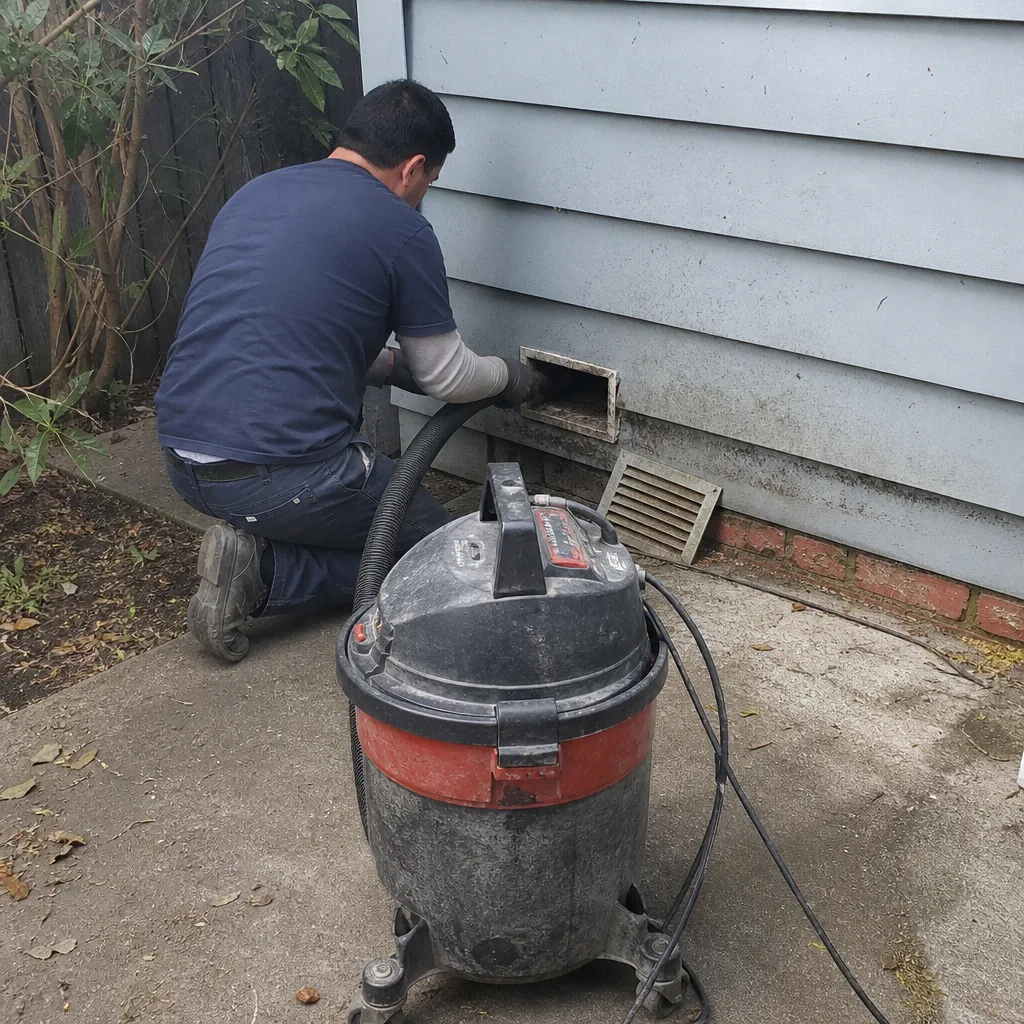 Before
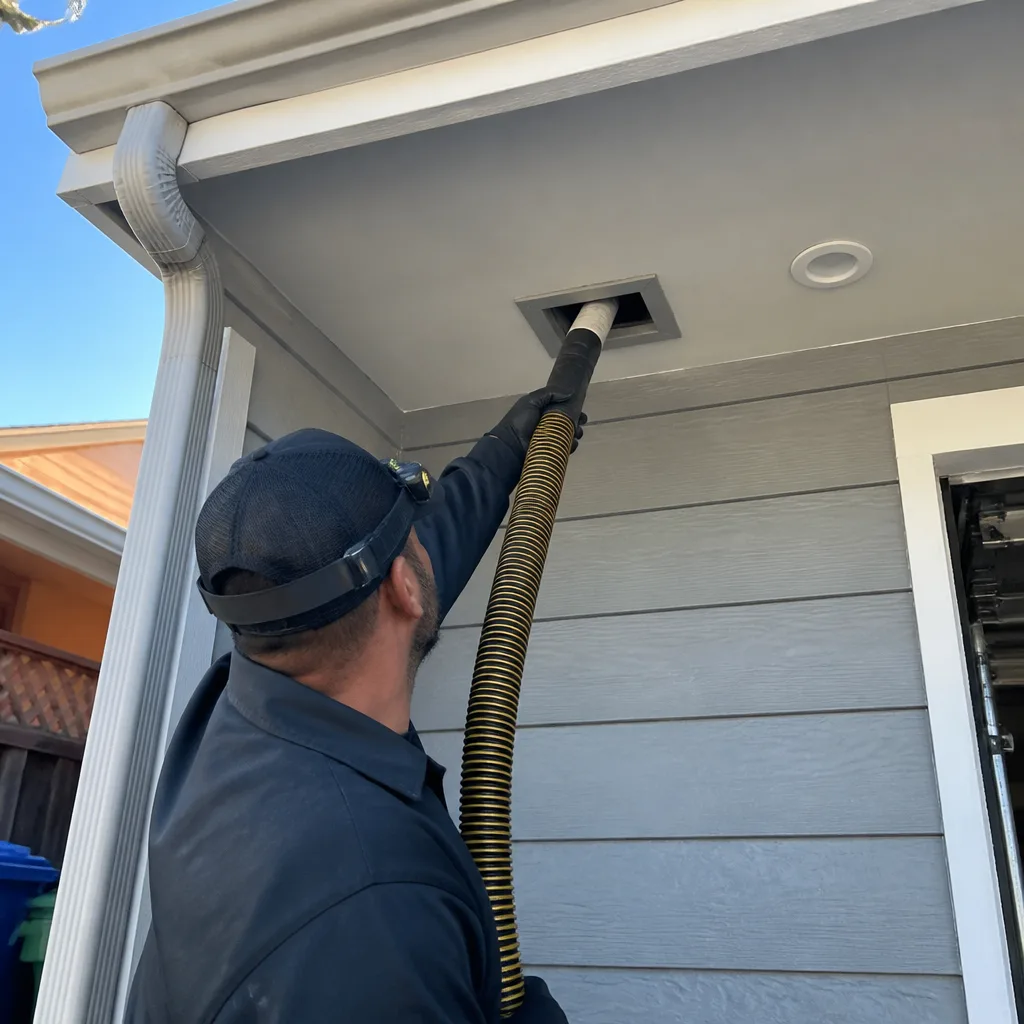 After
 Before
 After