
Last updated November 3, 2026
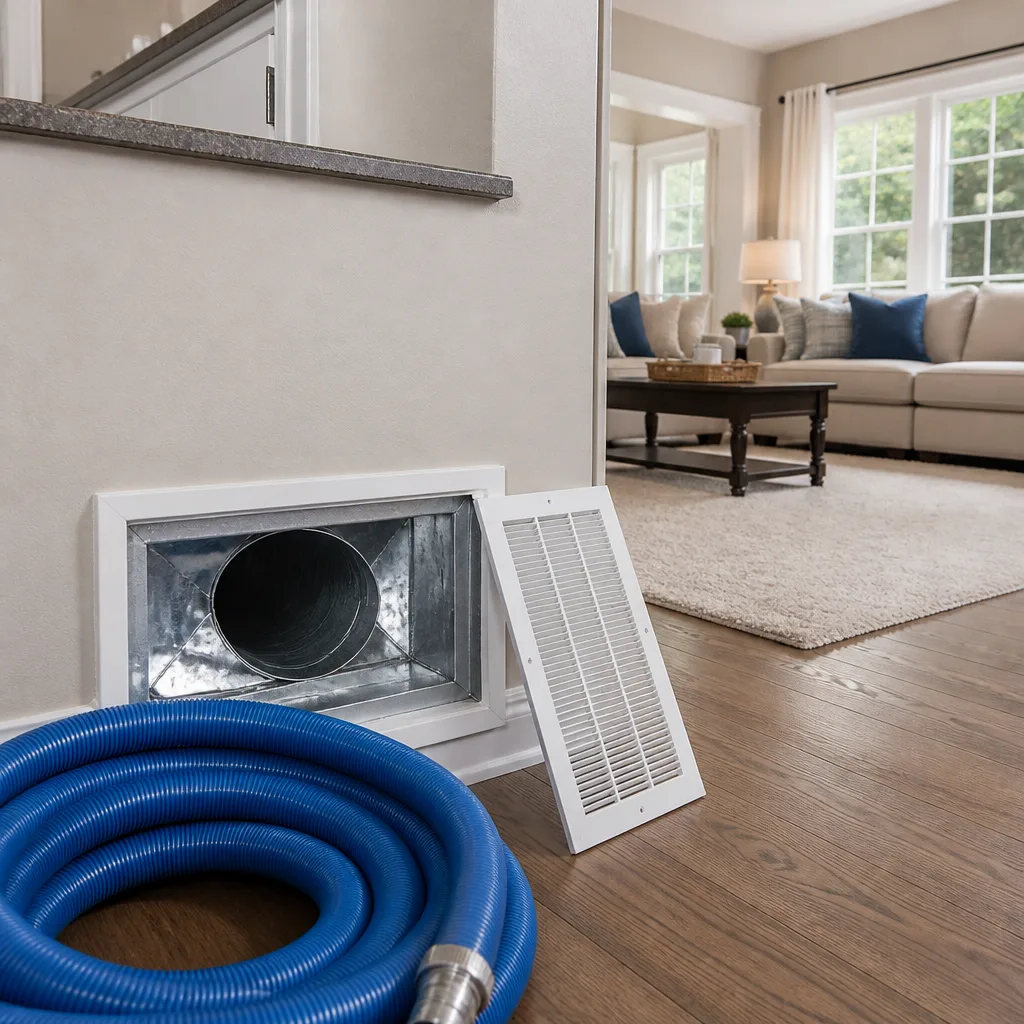 Whole-home duct cleaning
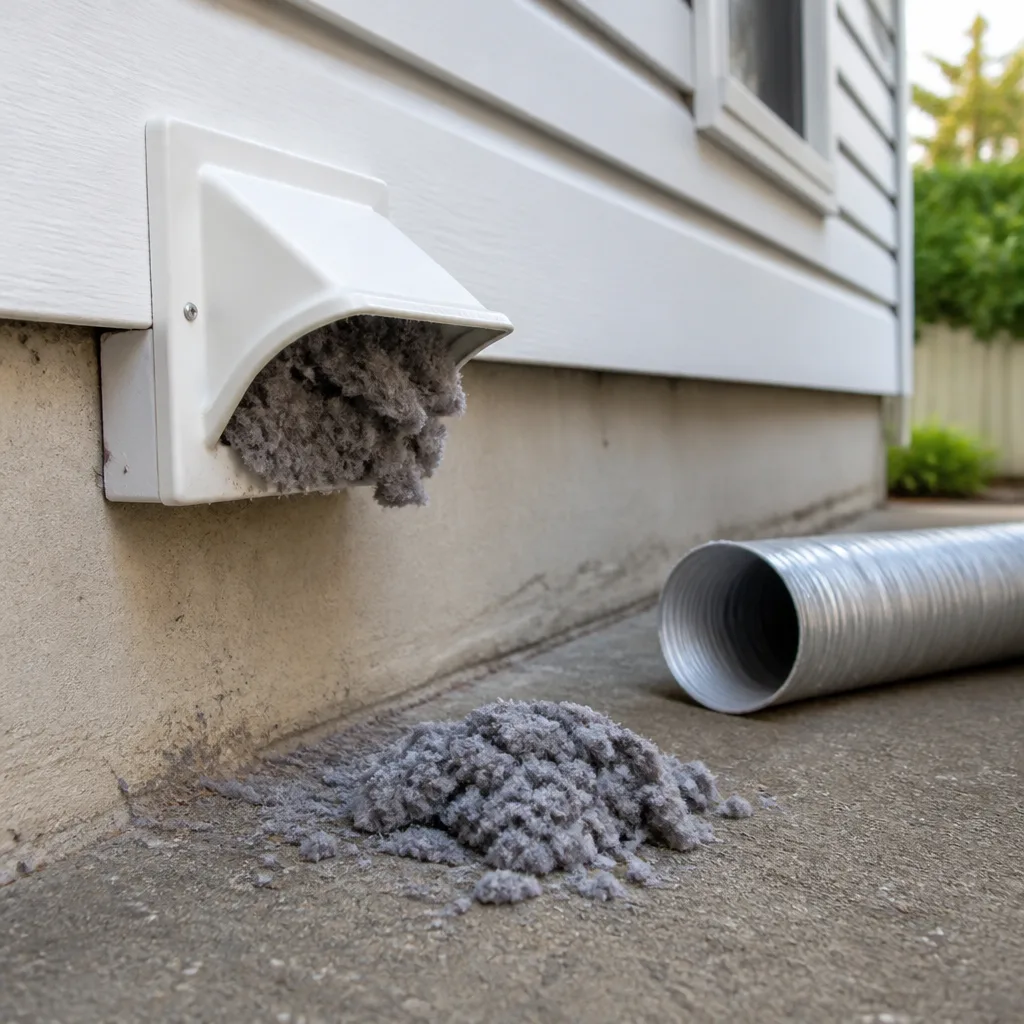 Dryer vent cleaning
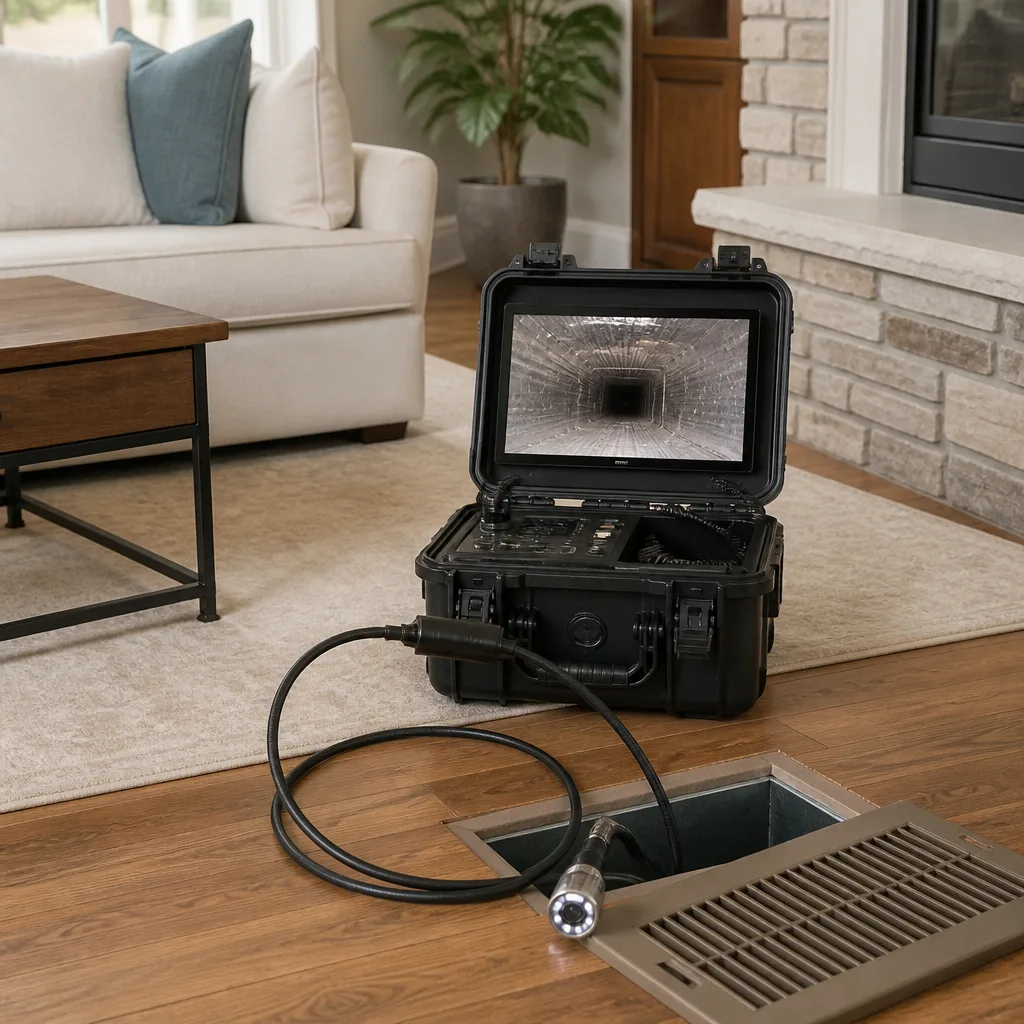 Camera inspection
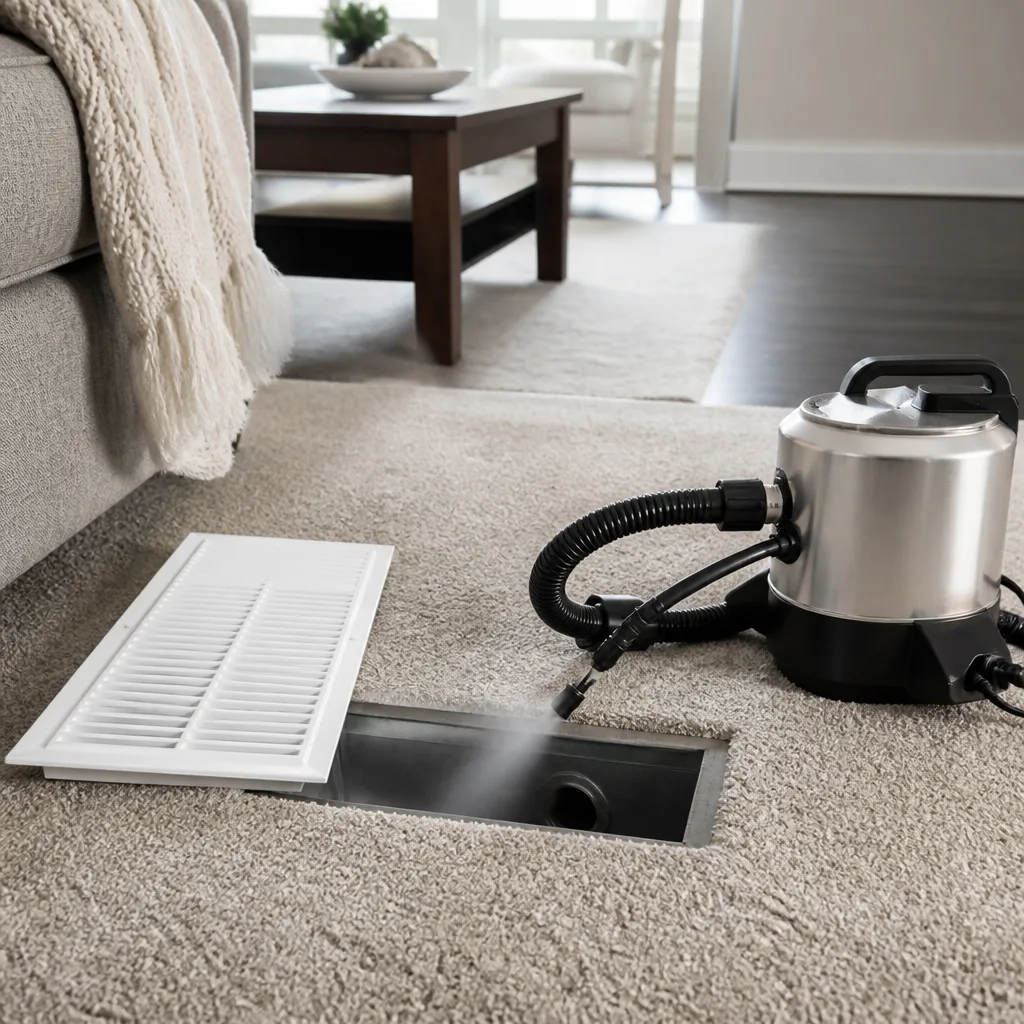 Sanitizing & deodorizing
Whole-system duct and dryer vent check with before-and-after photos - you see exactly what came out of your vents
That "$99 whole-house special" is a bait ad - the real number appears once they are in your hallway, or the "clean" is a shop-vac at the register. We photograph the inside of your ducts before and after instead.
The Complete Air Duct Cleaning Guide for Alameda Homeowners
Most Alameda homes were built before 1980, which means their ductwork was installed when central air conditioning was an afterthought and nobody worried much about what accumulated inside the sheet metal. The result is a housing stock where decades of dust, pet dander, and coastal moisture have been cycling through the same ducts for forty, sixty, sometimes eighty years without a single professional cleaning. This guide explains what actually lives in Alameda ductwork, why the salt air makes it worse here than inland, what a legitimate Air Duct Cleaning looks like versus a bargain job, and how to verify the work before you pay for it.
Quick Answer
The Complete Guide to Air Duct Cleaning in Alameda notes that costs run between $450 and $1,200 for a typical single-family home depending on system size, number of returns, and the level of contamination. The job requires professional-grade negative-pressure equipment and source-removal tools, not a shop vac, and should include before-and-after photographic proof of every trunk line. Homes with crawl-space duct systems common in Alameda’s older bungalows need a company that can access ductwork from below the floor, not just through ceiling registers.
Styles & brands we work with
- Whole-home duct cleaning
- Dryer vent cleaning
- Camera inspection
- Sanitizing & deodorizing
Table of Contents
- Why Alameda’s Climate and Housing Stock Make Duct Cleaning Different
- What’s Actually Inside Alameda Ductwork
- Crawl-Space vs. Attic Duct Systems: Why Access Changes Everything
- Contact Vacuum vs. Negative-Pressure HEPA Extraction: Know the Difference
- What a Legitimate Duct Cleaning Should Include: Step by Step
- How to Verify the Work Was Actually Done
- Post-Cleaning Steps for Alameda’s Marine Layer Environment
- How Much Does Air Duct Cleaning Cost in Alameda?
Why Alameda’s Climate and Housing Stock Make Duct Cleaning Different
Alameda sits in a narrow band of the East Bay where the marine layer rolls in most evenings between May and August, pushing relative humidity consistently above 70 percent. That moisture finds its way into duct systems through return air, crawl spaces, and the small gaps where duct sections connect. Once humid air enters an uninsulated metal duct, condensation forms on the interior walls, and that condensation becomes a trap for airborne particles.
Inland cities like Livermore or Concord have dry heat that desiccates duct interiors. Dust stays loose and relatively inert. In Alameda, the same dust becomes damp, sticky, and biologically active. We regularly see ducts in Bay Farm Island and the Gold Coast where fine dust has bonded to the sheet metal like a layer of felt, fused together by years of condensation cycles. That caked-on layer doesn’t respond to a simple vacuum pass. It requires rotary brushing and agitation to break it free before extraction.
The salt air adds another variable. Homes within a mile of the shoreline in Alameda get airborne salt particles that settle on interior metal surfaces. Salt is hygroscopic, meaning it pulls moisture from the air. A salty dust layer inside a duct stays damp longer than ordinary dust, accelerating corrosion on ungalvanized sections and creating conditions where mold spores can take hold. This is not a hypothetical. We’ve documented rust staining on duct interiors in houses on Central Avenue and Shore Line Drive that have no history of flooding or roof leaks. The salt in the air did the work over a period of decades.
Older Alameda housing stock compounds the problem. Victorians on the East End built between 1880 and 1920 often have retrofit duct systems added in the 1950s or 1960s, with sheet metal run through existing voids rather than designed into the structure. These retrofit systems have more joints, more bends, and more dead-end branches than a modern installation, which means more places for debris to accumulate and more spots where duct tape from previous repairs has dried out and failed.
Understanding these local conditions matters because it changes what a cleaning needs to accomplish. A standard cleaning that simply vacuums out loose debris from the branches might be adequate for a three-year-old home in Pleasanton. In Alameda, where ducts are older, damper, and more likely to have baked-on contamination, the equipment and the process need to be more aggressive.
What’s Actually Inside Alameda Ductwork
If you removed the register covers from most Alameda homes and looked inside, you would find a predictable set of materials. Some of them are obvious. Some are not. Knowing what’s there helps you understand why professional equipment matters and why a handyman with a shop vac is not the same service.
- Drywall dust. Homes remodeled at any point without airtight duct sealing have fine gypsum dust swept into the return air. This is a mineral dust that settles into low spots in the duct runs and re-enters the air every time the furnace blower cycles on.
- Pet dander and hair. Alameda has a high rate of pet ownership. Dander is sticky and adheres to wet duct interiors. A single cat can shed enough dander in a year to create measurable buildup in the return plenum.
- Carpet fibers and textile lint. These accumulate in the return registers, especially in older homes where wall-to-wall carpet was installed over oak floors. The fibers trap other particles and form mats that restrict airflow.
- Insect casings and spider webbing. Crawl-space duct systems have particular problems here. Small gaps where flex duct connects to rigid trunk lines allow insects in, and spider webs inside duct branches catch dust and build up over time. We see this in Alameda bungalows on the West End more than anywhere else we work.
- Rodent evidence. Houses with raised foundations in Alameda create the under-floor access rats and mice use. The ducts become pathways. Droppings and nesting material inside ductwork are a direct IAQ hazard, and they’re shockingly common in pre-war housing.
- Soot or smoke residue. Homes with fireplaces that were used heavily in past decades retain a fine layer of sooty residue on the return side of the system. Once the blower distributes this, every room gets a fresh coating.
- Mold and mildew growth. This is the one that worries people most, and it’s the most directly tied to Alameda’s humidity. Not every dark staining inside a duct is mold, but mold spores are present in almost every home, and a damp dusty surface is exactly where they germinate. Getting a visual confirmed by a professional matters if you suspect active growth.
What’s not inside a well-maintained duct system is a layer of dust thick enough to write your name in. If your registers look like that, the system has been neglected for years, and cleaning it properly is a mechanical job, not a wipe-down.
Crawl-Space vs. Attic Duct Systems: Why Access Changes Everything
Alameda’s housing stock splits into two distinct duct access profiles, and which one your house has determines how a cleaning company needs to approach the job. This is not a distinction most guides make, but it’s central to whether a cleaning actually works.
Single-story homes built before roughly 1960 in Alameda – the bungalows that line the streets of the West End and the East End – typically run their ductwork through the crawl space beneath the floor. The furnace sits in the crawl space or in an interior closet, and supply ducts run horizontally under the floor joists before turning up into wall registers. Return air is often pulled through a single large floor grille or a wall cavity, or in some older systems, there’s no return duct at all and the furnace pulls from the crawl space itself.
Crawl-space systems present specific access challenges. A technician cannot simply reach the duct from a ceiling register. They need to enter the crawl space, locate the trunk line and each branch, and either disconnect sections or cut access ports to insert cleaning tools. In many Alameda crawl spaces, clearances are tight, the ground is sandy and damp, and the ducts are wrapped in old insulation that can contain fiberglass particles.
Two-story homes and newer construction in the Harbor Bay and Bay Farm areas more often run ducts through the attic or between floors. These systems have different access needs, primarily through the registers themselves and through the plenum at the unit. Attic access is simpler in many ways, but attic ducts in Alameda face their own problem: heat. Uninsulated or partially insulated ducts in an attic can reach 130 degrees in summer, baking dust onto the metal liner and making it harder to remove.
Flat-roofed homes, common on Alameda’s old industrial and mixed-use streets, often have no attic or crawl space at all. Their ducts typically run through floor chases or in soffits, which means registers are the only practical access points. A company that only knows one access method will struggle with Alameda’s architectural variety.
Before hiring anyone, figure out where your ducts actually run. Go beneath your house if you have a raised foundation. Go into your attic if you have one. Note where the trunk lines are and whether you can see visible damage. A company that asks you about the system layout before quoting is doing it right. A company that quotes over the phone without asking about access is guessing.
Contact Vacuum vs. Negative-Pressure HEPA Extraction: Know the Difference
The most important distinction in the air duct cleaning industry, as detailed in our DIY vs Professional Air Duct Cleaning: The Alameda Homeowner’s Decision Guide, is between a contact vacuum pass and a true negative-pressure HEPA extraction. Understanding this difference is what separates customers who get their ducts actually cleaned from those who get a visual once-over and a bill.
A contact vacuum means exactly what it sounds like: a vacuum hose is placed against the inside of the duct at each register opening. Loose debris within a few inches of the hose gets pulled out. The rest stays in place. This is what most cheap duct cleaning services perform, and it’s functionally equivalent to vacuuming your carpet through a drinking straw. The visible part near the register looks cleaner, but the trunk line, the return plenum, and the deep branches remain untouched. In an older Alameda system with years of caked-on debris, a contact vacuum clean is nearly cosmetic.
A negative-pressure HEPA extraction works differently. The system is taken offline, and a large vacuum unit is connected to the main trunk line near the furnace. This creates negative pressure inside the entire duct system, pulling air from every register down toward the vacuum. While the system is under negative pressure, technicians insert rotating brushes or compressed air tools through each register and agitate the interior surfaces. The debris that’s knocked loose is pulled by the air current toward the vacuum, not pushed out into your living room. The vacuum unit’s HEPA filtration captures the fine particles while the larger debris falls into a collection chamber.
The difference in equipment matters. Professional-grade machines, like the Rotobrush rotary brush systems and Nikro HEPA-filtered vacuum units used on commercial and remediation projects, move enough air to pull debris from the far end of a 40-foot trunk line. A portable vacuum cannot do this. In Alameda’s older homes with long, multi-branch duct layouts, underpowered equipment leaves contamination in the branches farthest from the furnace.
Negative-pressure extraction also addresses a safety concern specific to older houses. Homes built before 1978 may have asbestos-containing materials in insulation, flooring, or tape that could be disturbed during cleaning. Under negative pressure, any particles dislodged are pulled into the vacuum and away from living spaces. With a contact vacuum, loose particles are more likely to escape into the house. For this same reason, companies working on older homes should use containment strategies similar to those employed on remediation projects, like the negative air and containment equipment used with Abatement Technologies systems. This keeps what’s inside the ducts from becoming what’s inside your lungs.
When you’re getting quotes, ask directly: “Does your process use negative-pressure extraction with HEPA filtration, or is it a contact vacuum at the registers?” The answer tells you most of what you need to know.
What a Legitimate Duct Cleaning Should Include: Step by Step
A full-system air duct cleaning follows a defined sequence. Every legitimate company works through these steps in roughly this order. If your contractor skips several of them, you’re getting a partial job.
- System inspection and pressure test. Before any cleaning begins, the technician should inspect the furnace blower, coil, filter housing, return plenum, and visible duct runs. They should check for leaks, disconnected sections, and signs of water damage or pest activity. This step establishes a baseline and identifies repairs needed before or during the cleaning.
- Protection of living spaces. The area around each register should be shielded, and the company should use drop cloths or containment barriers as needed. If you have furniture near the registers, move it before the team arrives.
- Isolation of the system. The HVAC system is shut down and the blower is locked out so nothing recirculates during the work. Registers in rooms not being actively cleaned may be sealed to maintain negative pressure in the section being worked.
- Connection of the vacuum unit. The HEPA vacuum is connected to the main trunk line, usually at the furnace plenum or a designated access point. This unit stays running throughout the cleaning, creating continuous negative pressure in the system.
- Agitation of all supply runs. Starting at the farthest registers and working back toward the main trunk, brushes or air tools are run through each branch. This is the source-removal step. The debonding of caked-on material requires mechanical agitation, not just airflow.
- Cleaning of the return side. Many companies clean the supply ducts and ignore the return. The return plenum, return drop, and any return branches need the same level of agitation and extraction. In Alameda homes with a single large return, the return plenum is often the dirtiest part of the system.
- Coil and blower inspection. If the evaporator coil or blower wheel is accessible, it should be inspected and gently cleaned if needed. A dirty coil will undo much of the benefit of clean ducts when condensation collects on it and grows new biological material.
- Filter replacement or evaluation. The final step before reassembly is verifying the filter. If the filter is clogged or undersized, the clean ducts will start accumulating new debris immediately.
- Documentation. A legitimate cleaning includes before-and-after photos of every trunk line, major branch, and any problem areas identified. You should receive these, either digitally or in a printed report.
Most single-family Alameda homes take three to five hours for a full system clean. A company that promises a complete cleaning in under an hour is doing contact-vacuum work or worse.
How to Verify the Work Was Actually Done
The air duct cleaning industry has a well-earned reputation for invisible work. You pay, the van leaves, and you’re left trusting that something happened inside walls and under floors you’ll never see. Verifying the work is both your right and the only way to know you got what you paid for.
Start with documentation. A legitimate company will provide time-stamped before-and-after photos taken with an inspection camera, not just a phone held at the register. These photos should show the same section of duct from the same angle, before and after. Look at the trunk line near the furnace, not just the register boots. The boots always look cleaner because they’re easiest to reach. The trunk line photo tells you whether the deep work was done.
Ask for photos of areas you flagged before the job. If you saw debris in a specific branch or rodent nesting in the return, there should be after-photos of those exact locations.
Check the filter after the job. A system that was genuinely cleaned has a new or cleaned filter. If the old filter was left in place, the first blower cycle is pushing pre-cleaning air through a pre-cleaning filter, and you’ve already lost some of the benefit.
Inspect the registers yourself. Remove a supply register in a room far from the furnace and look down the branch with a flashlight. The visible duct interior should be bright metal, not gray or coated. Run your finger along the first few inches. It should come back clean, not dusty. This is a simple, definitive test.
A selfie-style photo from the technician showing them next to the equipment is not documentation. Neither is a photo of the vacuum unit sitting in your driveway. You want interior duct photos, before and after, delivered at the end of the job.
If the company refuses to provide photos or offers excuses about camera trouble, that’s a red flag. The technology to capture these images costs under $200. A company that claims to clean air ducts professionally has no excuse for not showing you the inside of your ducts.
Post-Cleaning Steps for Alameda’s Marine Layer Environment
The work doesn’t end when the vacuum shuts off. Alameda’s humidity means that whatever you do in the days and months after a cleaning determines how long the results last. A clean duct in a damp house starts re-accumulating contamination immediately, just like a clean car on a coastal street starts filming with salt spray.
Run your furnace blower continuously for two to three hours after the cleaning is complete. This circulates air through the cleaned system and helps dislodge any particles that were loosened but not fully extracted. Keep the fan setting to “on” rather than “auto” for the first day. If your system has a variable-speed blower, running it on a low speed is fine.
Change the filter after the first week post-cleaning, even if you installed a new one during the job. The cleaning process dislodges fine particles that take a few blower cycles to find their way to the filter. A filter that captured a week of this post-cleaning debris is a filter doing its job, but now it’s partially loaded. Replace it.
Monitor indoor humidity in summer. Alameda’s marine layer means indoor relative humidity can sit at 65 to 75 percent on summer nights even in homes without visible moisture problems. If you don’t have a hygrometer, buy one for under $20 at any hardware store. Sustained indoor humidity above 60 percent encourages microbial growth inside ducts, regardless of how clean they started. If your readings are consistently high, run a portable dehumidifier in the area near the main return, or install a whole-house dehumidifier if your system supports it.
Consider a filtration upgrade at the cleaning point. The standard one-inch fiberglass filters most older Alameda homes use protect the furnace but do almost nothing for indoor air quality. A media filter cabinet that accepts four- or five-inch MERV 11 to MERV 16 filtration, like the Honeywell and Aprilaire systems used by professional installers, turns your newly cleaned ducts into a delivery system for genuinely cleaner air rather than just a less-dirty one. This is the difference between cleaning and improvement.
If the company that cleans your ducts also handles repairs, address any disconnected or leaking sections now. Clean ducts that leak into a damp crawl space will simply re-contaminate from the outside. In Alameda’s raised-foundation homes, duct sealing is as important as duct cleaning.
How Much Does Air Duct Cleaning Cost in Alameda?
Whole-system air duct cleaning for a typical Alameda single-family home falls in the $450 to $1,200 range. The spread exists because Alameda’s housing stock is not uniform. A compact two-bedroom bungalow on the West End with six registers and a single return will price at the lower end. A large Victorian on the East End with multiple returns, long trunk lines, and two systems will be at or above the upper end. Homes with crawl-space access, rodent contamination, or heavy buildup add labor time.
| Home Profile | Typical Range | What’s Included |
|---|---|---|
| 2-bedroom bungalow, single return, crawl-space access | $450 – $700 | Full negative-pressure cleaning, supply and return lines, before/after documentation |
| 3-4 bedroom single-story home, 10-14 registers | $650 – $950 | All trunks, branches, return plenum, coil inspection, documentation |
| Large Victorian or two-story, multiple systems | $900 – $1,200+ | Multi-system cleaning, extended access time, full documentation |
Quotes below $350 for a whole-house cleaning in Alameda should raise questions. At that price point, the math doesn’t support the labor time required for access, agitation, extraction, and documentation. You’re almost certainly being sold a contact-vacuum service.
Quotes above $1,500 should also be justified with specifics: severe contamination, asbestos-related containment requirements, or unusual access conditions. Most homes don’t need that level of work.
For more guides & resources, see our blog, and get your quote in writing with a clear scope of work. Specify the number of registers, the access points to be used, whether the return side is included, and what documentation you will receive. A flat price per system, agreed before work begins, beats an hourly rate that can creep.
Common Mistakes to Avoid
- Choosing solely on price. Alameda’s older homes demand more equipment, more time, and more access work than a newer home in a newer city. A bargain quote almost certainly means contact-vacuum cleaning, skipped returns, or no documentation.
- Hiring without verifying equipment. Ask the company what vacuum and agitation tools they actually use. If the answer is “industrial-strength vacuum” with no brand or type specified, keep looking. Rotobrush and Nikro are the industry-standard names; a professional should know them.
- Allowing cleaning before inspection. A company that doesn’t inspect your system before quoting is guessing at scope. Inspect first, quote second, clean third. That’s the order.
- Skipping the return side. The return is often the dirtiest part of an Alameda system. Make sure your scope of work includes the return drop, return plenum, and all return branches. Get this in writing.
- Not checking filter sizing during the visit. Many older Alameda furnaces have incorrectly sized filter slots or are running one-inch filters where a deeper media filter belongs. Use the professional’s visit to evaluate this.
- Accepting “it’s clean now” without photos. If you can’t see the before and after, you’re being asked to trust a stranger. Don’t. Demand camera documentation of the trunk lines and returns.
- Putting off dryer vent cleaning as a separate issue. Dryer vent cleaning in Alameda is a fire-safety issue, not a comfort issue. Lint-choked dryer ducts are a leading cause of home fires, and older Alameda homes with long vent runs to exterior walls are particularly at risk. Have it done when you have your ducts done.
See the difference
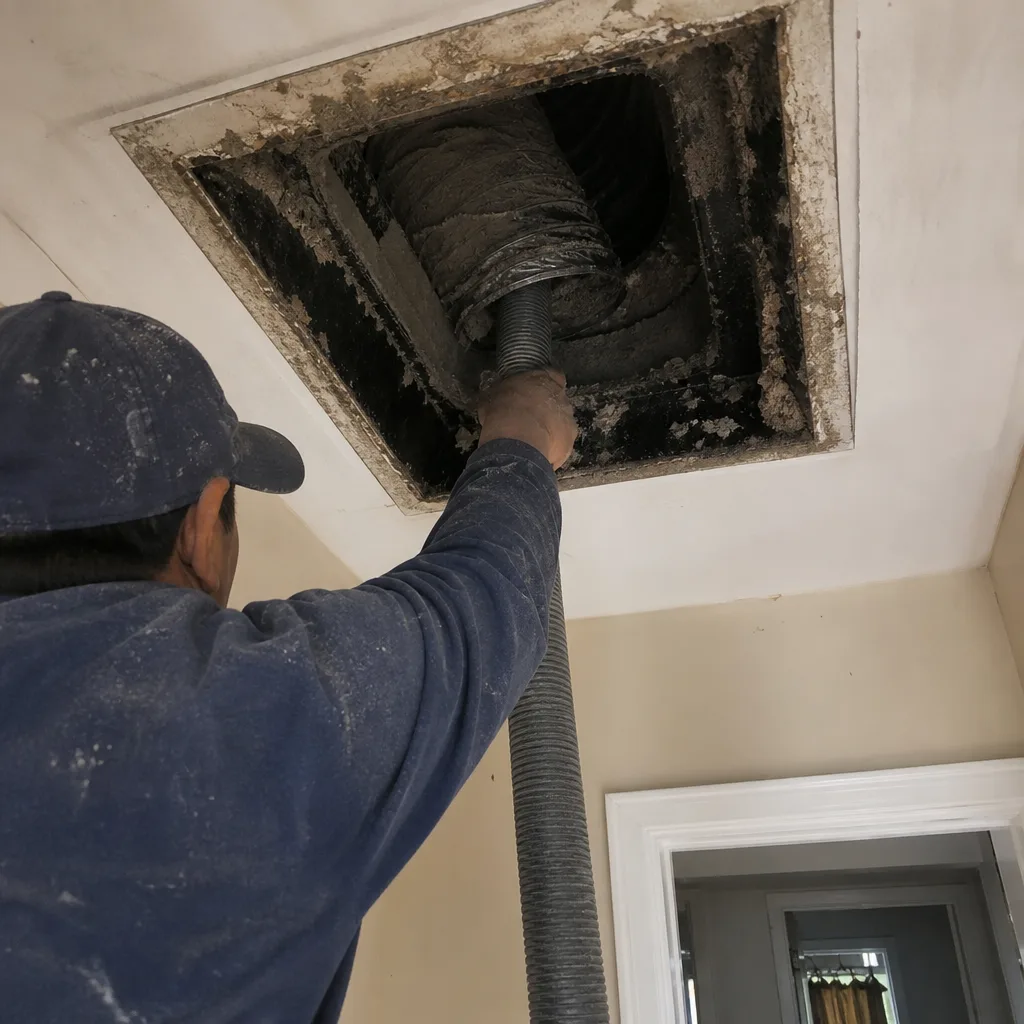 Before
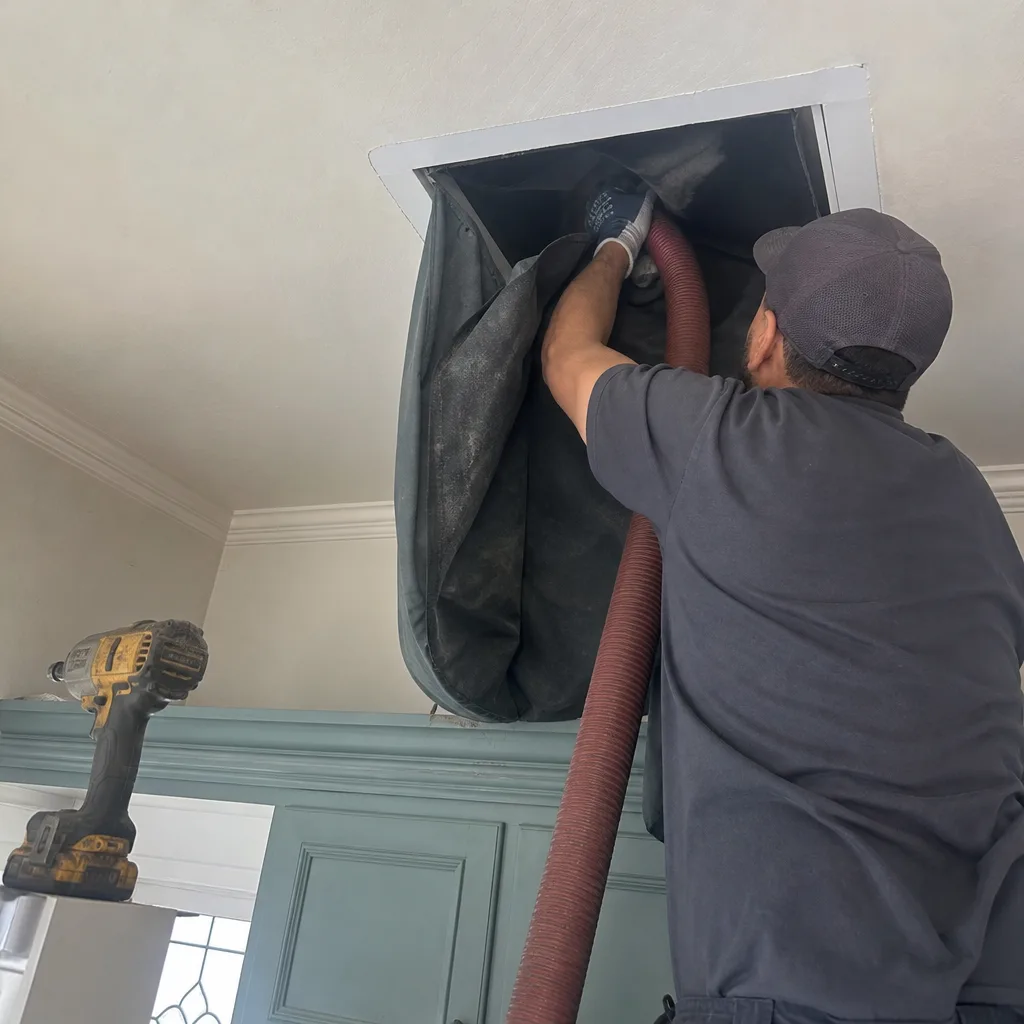 After
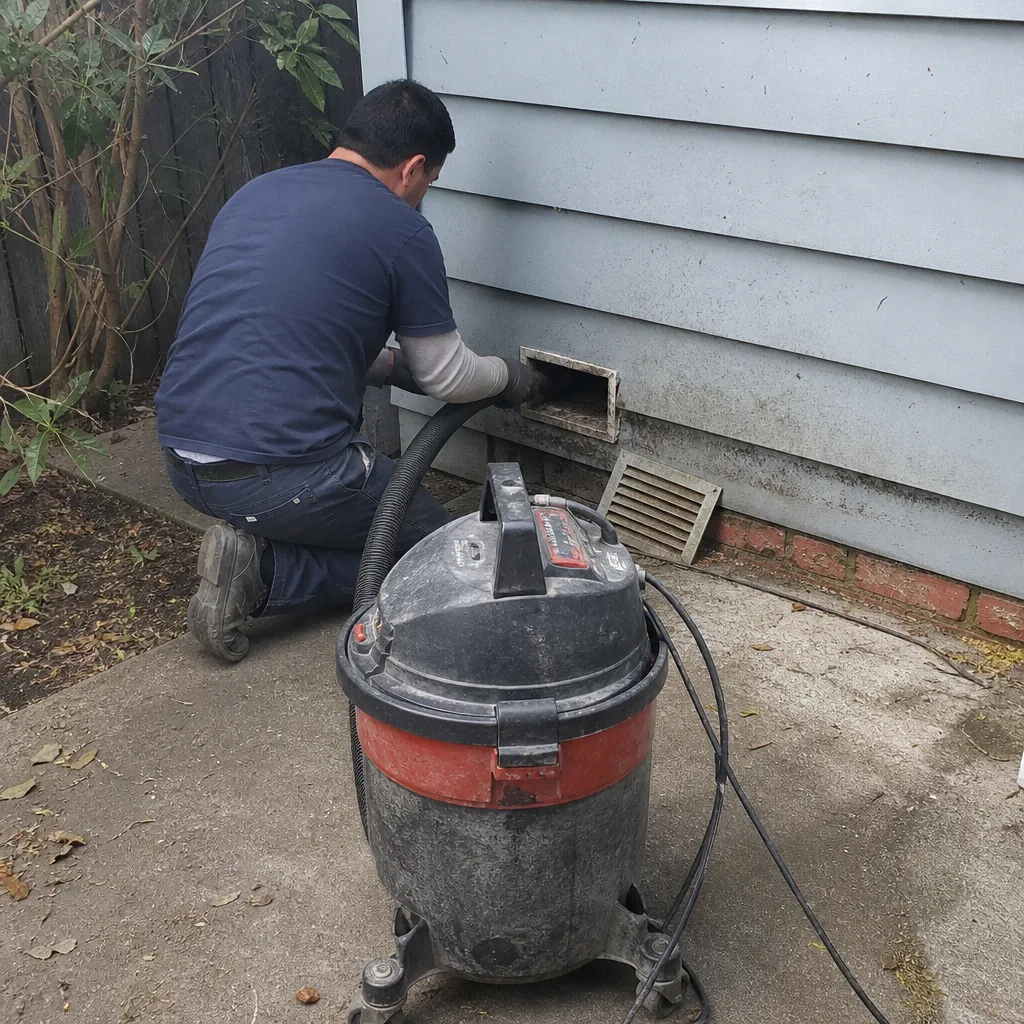 Before
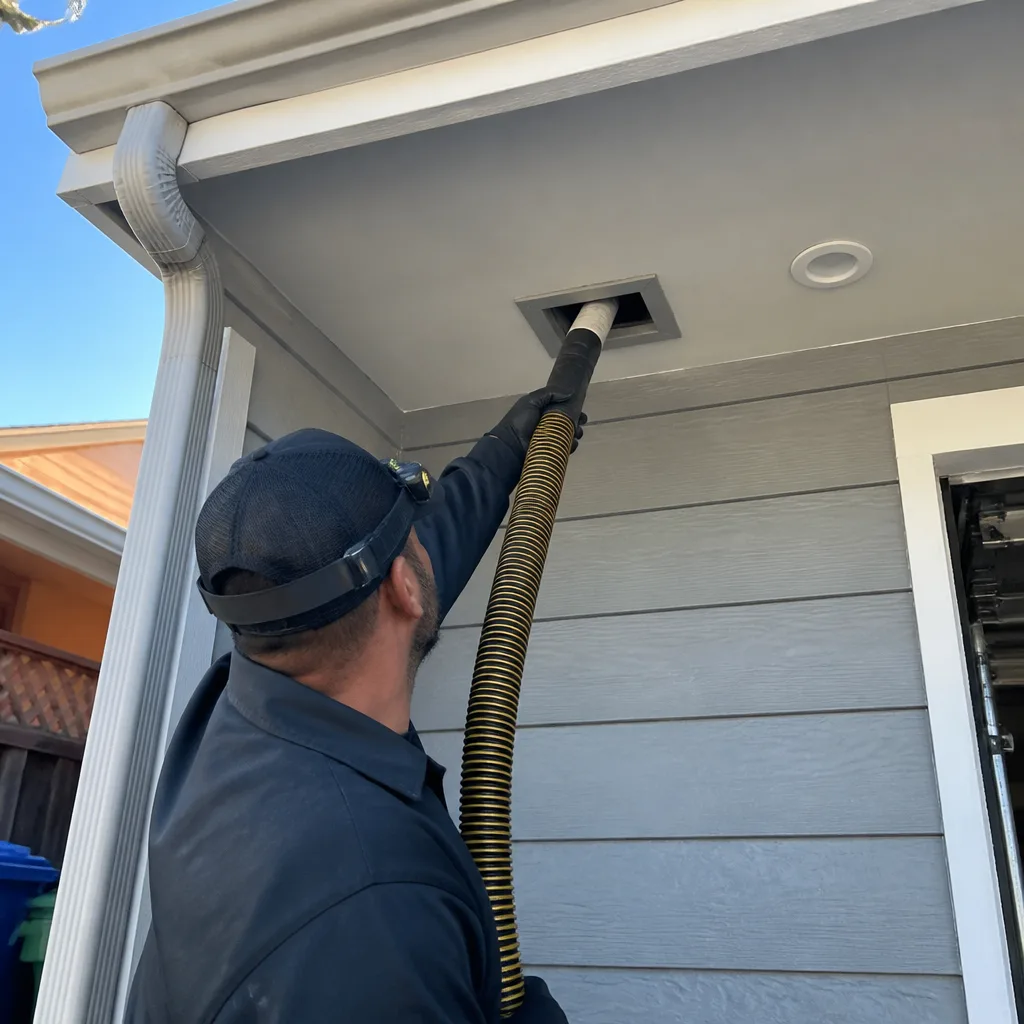 After
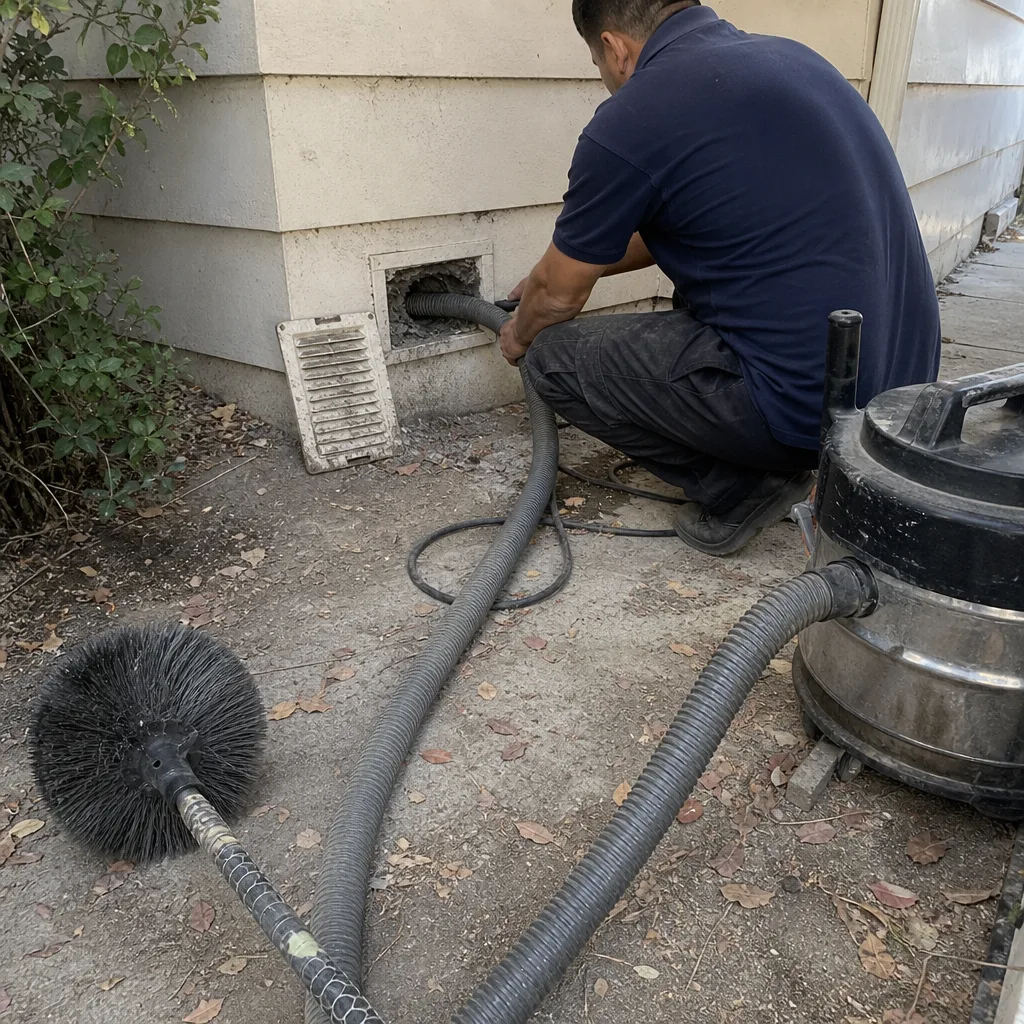 Before
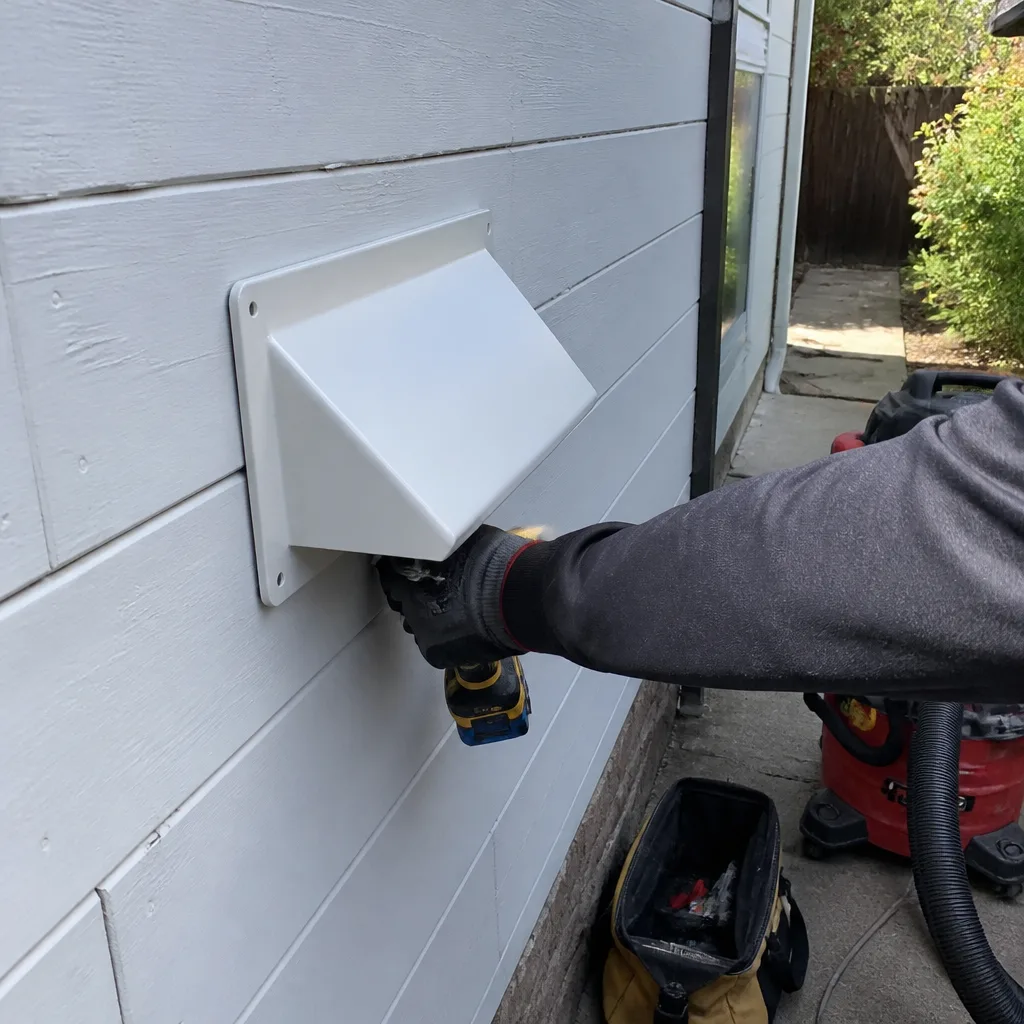 After
When to Call a Professional
Call a professional if your registers show visible dust or staining, if the house smells dusty whenever the furnace kicks on, or if you’ve just completed a remodel that produced drywall dust. Call if you have unexplained allergy symptoms indoors that improve when you leave, if you find rodent droppings near floor registers, or if you’ve lived in the house more than five years and have never had the ducts cleaned. Call if you’re buying an older Alameda home and want to know what’s inside the system before you move furniture in. Everclear Air Duct Cleaning offers free estimates in Alameda. Call (833) 620-5944 and say you want a system inspection.
Frequently Asked Questions
Every four to seven years is the standard interval for Alameda homes, but older homes with crawl-space systems, pets, or high humidity could warrant cleaning every three to five years. Coastal moisture accelerates debris bonding, so a home near the shoreline may need more frequent service than an identical home inland. If you’ve never cleaned the ducts in a house built before 1980, the first cleaning is the most important one.
Cheaper quotes almost always reflect a contact-vacuum process that cleans the visible register area without extracting debris from the trunk lines. A legitimate full-system negative-pressure HEPA cleaning requires professional equipment, multiple hours of labor, and documentation, which has a real cost. If one quote is half the price of the other two, ask what process and equipment the cheaper company uses, and ask to see sample before-and-after photos from previous jobs.
You should receive time-stamped before-and-after photos of your duct interiors, not just register openings. After the job, remove a register in a far room and look inside with a flashlight; the visible duct should be clean metal. Run your finger along the inside of the branch. It should come back clean. A company that won’t provide interior photos hasn’t done the work.
It can, if the system has been accumulating allergens for years. Pet dander, dust mite waste, pollen, and mold spores are all capable of cycling through a dirty duct system. Cleaning removes the reservoir, but sustained relief depends on what you do after: upgrade filtration, control indoor humidity against Alameda’s marine layer, and seal any duct leaks. Air duct cleaning in Alameda is a starting point, not a complete IAQ solution.
You can vacuum the register openings and visible boots, but you cannot reach the trunk lines or the deep branches without professional equipment. A shop vac cannot create the negative pressure needed to pull debris from a 30-foot trunk run. Attempting a DIY cleaning can also damage foil flex duct or dislodge insulation. The economics work against DIY: professional equipment costs tens of thousands of dollars, and a proper cleaning lasts years.
After. Any demolition, drywall sanding, or flooring work generates dust that enters the system through returns. Cleaning before a remodel means the new work re-contaminates the ducts immediately. Clean after the remodel is complete and the dust has settled. If you’re combining renovation with air duct repair in Alameda, coordinate the repair and sealing work with the cleaning so everything is addressed in one service window.
We clean duct systems throughout the island, including the East End, West End, Gold Coast, Bay Farm Island, and Harbor Bay. Everclear Air Duct Cleaning home is based in Alameda, so we understand the older housing stock and the marine-layer humidity that shapes our local approach. Call (833) 620-5944 for a free estimate.
The Bottom Line
Alameda’s coastal climate, older housing stock, and varied duct access profiles make air duct cleaning a more technically demanding job here than in most Bay Area cities. A legitimate cleaning uses negative-pressure HEPA extraction with rotary agitation, includes the return side, and delivers photographic proof of the work. Cheap contact-vacuum cleaning leaves the worst contamination untouched. After cleaning, filtration upgrades and humidity control determine how long the results last. If you suspect your Alameda ducts haven’t been properly serviced, get a system inspection and a written scope of work before committing. See the difference a full-system, equipment-backed cleaning makes, from the inside out.
Written by the team at Everclear Air Duct Cleaning, serving Alameda since 2017.